Let's be honest. When most people think of Southeast Asian food, Myanmar (Burma) isn't the first country that pops up. Thailand's tom yum and Vietnam's pho get all the headlines. But after spending weeks eating my way from Yangon's chaotic streets to the quiet tea shops of Mandalay, I'm convinced Burmese cuisine is the region's most underrated secret. It's a fascinating, sometimes challenging, always delicious crossroads of flavors you won't find anywhere else.
Forget the generic "curry" label. Myanmar food is a tapestry. Imagine the herbal, brothy lightness of Thai soups meeting the rich, slow-cooked gravies of Indian curries, then tossed with the tangy, crunchy textures of a Lao papaya salad. It's all held together by a uniquely Burmese obsession: balance. Every meal is a play of sour, salty, spicy, bitter, and umami, often on the same plate.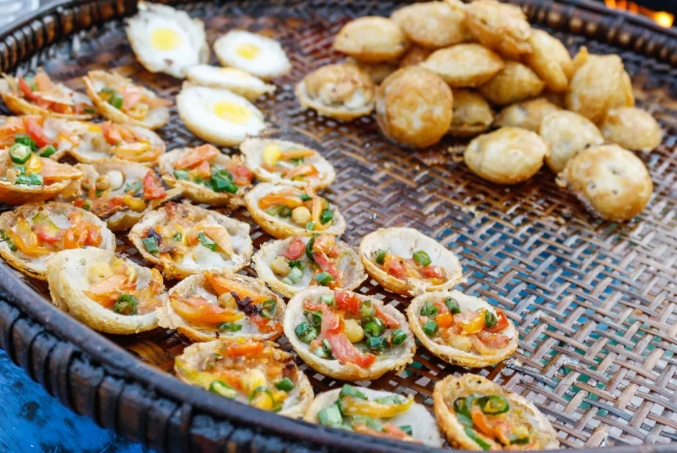
What’s Inside This Guide
The Flavor Foundation: More Than Just Fish Sauce
To get Myanmar food, you need to know its building blocks. It's not a single dominant note but a chorus.
Ngapi is the undisputed king. This fermented shrimp or fish paste is the umami bedrock. It's in curries, it's mixed into dips, it's the soul of many salads. The smell can be intense for the uninitiated—pungent, salty, deeply oceanic. But in a dish, it melts into the background, providing depth you'd miss if it were gone. Think of it like fish sauce's more complex, funky cousin.
Turmeric and ginger are the workhorse spices, giving many curries and soups their golden hue and warm, earthy base. You won't find the complex spice blends of Indian curries here. The heat often comes from fresh chilies or chili powder added to taste, not from the curry paste itself.
Then there's the textural symphony. This is what truly sets it apart. A single dish, like the famous lahpet thoke (fermented tea leaf salad), will have crunchy fried beans, nuts, and garlic, chewy tea leaves, juicy tomatoes, and sharp chilies. Every bite is different.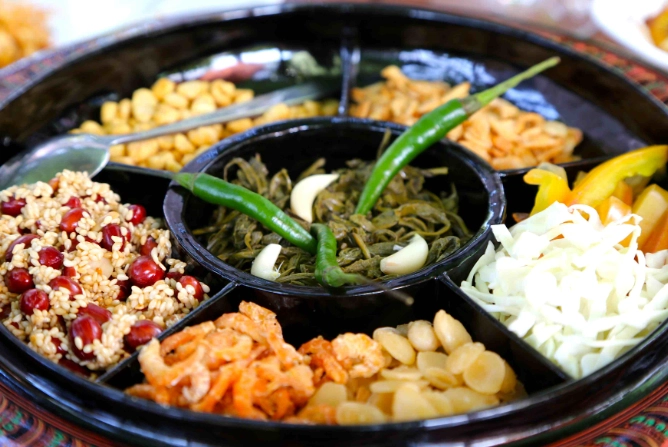
A common mistake first-timers make: They judge a dish by its first bite, which might be overwhelmingly salty or sour. Burmese food is designed to be eaten with plain rice. The rice mellows and balances each intense flavor. Always take a bite of your curry or salad with a good amount of rice.
Non-Negotiable Dishes You Have to Try
You can't try everything, so focus on these essentials. They're the pillars.
1. Mohinga
Called the national dish for a reason. It's a breakfast rice noodle soup in a savory, herbal broth made from catfish, lemongrass, ginger, and banana stem. Topped with crispy fritters, boiled egg, and cilantro. It's comforting, complex, and utterly addictive. The best versions are found at dedicated mohinga stalls early in the morning. In Yangon, look for the places with the longest queues of locals on their way to work.
2. Lahpet Thoke (Fermented Tea Leaf Salad)
This is the dish that surprises everyone. Fermented tea leaves are slightly bitter, tangy, and caffeinated. They're mixed with a riot of textures: crunchy fried peas, peanuts, garlic, sesame seeds, fresh tomatoes, and chili. It's a salad, a stimulant, and a cultural icon all in one. It's an acquired taste for some, but skipping it means you haven't really tried Burmese food.
3. Shan-Style Noodles
Hailing from the Shan State, these are my personal favorite. Flat, wide rice noodles served either in a light, savory chicken or tomato-based broth, or as a dry noodle dish (Shan khao swè) with a concentrated meat sauce, peanuts, and pickled vegetables. It's less oily and more delicate than many Burmese noodle dishes. The flavor is clean, savory, and deeply satisfying.
4. Burmese Curry (Hin)
Don't expect a thick, creamy sauce. Burmese curries are about the protein—pork, beef, chicken, fish, or goat—slowly simmered in its own fats and juices with those foundational spices (turmeric, chili) until incredibly tender. The oil separates and floats to the top. It's rich, savory, and designed to be spooned over rice alongside a plate of raw or blanched vegetables and a tart, spicy dip like balachaung (fried chili shrimp paste).
Where & How to Eat: From Street Stalls to Tea Shops
The setting is half the experience. Fine dining isn't the point here.
Street Food Stalls are where the magic happens. Look for stalls with a steady stream of locals. Hygiene is often better than you'd think—high turnover means fresh food. Pointing and smiling works perfectly. A bowl of noodles or a couple of skewers rarely costs more than 1,500-3,000 MMK ($0.70-$1.40).
Tea Shops (Kakawe) are the social hubs. They serve strong, sweet milk tea, but their food menus are extensive. This is where you go for a full Burmese breakfast or lunch: a curry with rice, assorted fritters, steamed buns (pau), and salads. It's chaotic, loud, and the best place to people-watch. Don't be shy to share a table.
For a more structured experience, here are a few specific recommendations across major tourist stops. These are places I returned to or have been consistently recommended by local friends.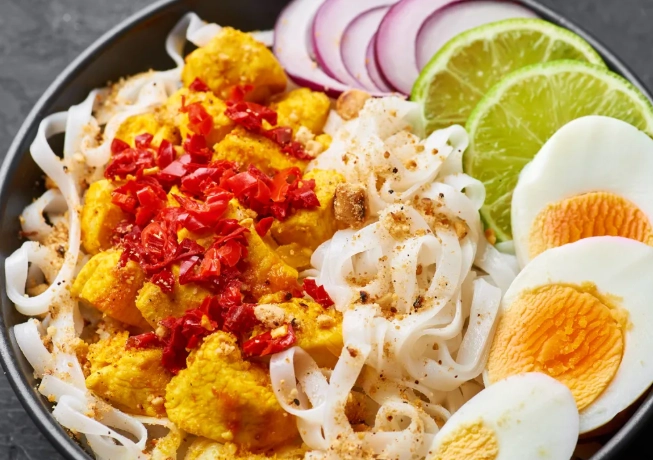
| Name & Location | What to Order | Vibe & Tips |
|---|---|---|
| Yangon: 999 Shan Noodle Shop 34th St, Middle Block, Yangon |
Shan Noodles (dry or soup), Tofu Salad. Their tea leaf salad is also excellent for beginners. | A bustling, no-frills institution. Always busy. Go for lunch. Expect to share a table. Budget: 2,500-5,000 MMK per person. |
| Mandalay: Min Thiha Street Food Stalls Corner of 81st & 30th St, Mandalay |
Barbecue (pork skewers, intestines), Mont Lin Ma Yar ("husband and wife" savory pancakes). | An entire street dedicated to evening BBQ. Grab a plastic stool. Point at what looks good. The pancake stall at the entrance is legendary. Budget: 4,000-8,000 MMK for a feast. |
| Bagan: The Moon - Be Kind to Animals Near Tharabar Gate, Old Bagan |
Vegan Burmese curries, Samusa Soup, Fresh Spring Rolls. | A vegetarian/vegan haven with clear English menus. Perfect if you're wary of ngapi or want a break from meat. Clean, quiet, with a lovely garden. Budget: 5,000-8,000 MMK. |
| Nationwide: Feel Myanmar Food (Multiple branches in Yangon & Mandalay) |
Go for the buffet-style selection. Try a little of everything: multiple curries, soups, salads, and dips. | The ideal "Burmese food 101" spot. Point at the pre-made dishes behind the glass. Efficient, tourist-friendly, and a great way to sample a wide variety quickly. Budget: 6,000-10,000 MMK. |
Beyond the Bowl: Regional Variations
Myanmar is incredibly diverse, and the food changes as you move.
In the Shan State (Inle Lake, Kalaw), you're in noodle and tofu territory. Shan tofu, made from chickpea flour, is a revelation—jiggly, soft, and often served in salads or fried. The food is generally less oily, with clearer broths and more fresh herbs.
Head to Rakhine State on the west coast, and the influence turns towards fierier, fish-heavy dishes. Rakhine Mont Di is a fiery noodle soup that will clear your sinuses.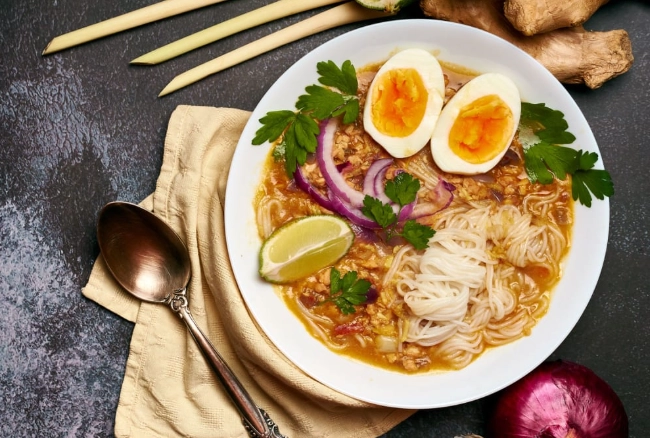
In the south, around Mon State, you find more coconut milk in curries, a clear influence from neighboring Thailand.
Most travelers stick to the central "Burmese" core, but asking about local specialties shows you're paying attention.
Ordering Like a Local: A Practical Guide
Let's get practical. How do you actually navigate a meal?
A typical Burmese lunch or dinner is a shared affair. You don't order one dish per person. You order a spread for the table:
- One main curry (hin) – pork, beef, or fish.
- A soup (hinga) – often a light, sour vegetable or leaf soup to cleanse the palate.
- Two or three salads (thoke) – maybe a ginger salad, a tomato salad, and the tea leaf salad.
- A plate of fresh raw or blanched veggies – cabbage, long beans, bitter gourd.
- A small bowl of dipping sauce, like ngapi ye (a diluted fish paste dip) or balachaung.
- A mountain of rice.
You take a bit of everything onto your plate, mixing flavors with each mouthful of rice. It's interactive, social, and the way the flavors are meant to be combined.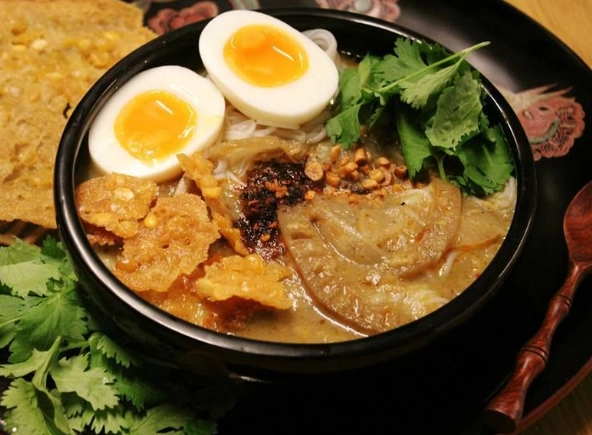
On drinks: Tap water is a no. Stick to sealed bottled water. Freshly squeezed sugar cane juice and lime juice from clean-looking stalls are usually safe and delicious. Local beer (Myanmar, Dagon) is a great pairing with the rich, savory food.
Your Myanmar Food Questions, Answered
What is the staple food of Myanmar?
Rice is the absolute staple, served with nearly every meal. The most common variety is ngacheik, a fragrant medium-grain rice. Noodles, particularly rice noodles (like those in mohinga) and Shan noodles, are also central to the diet, often eaten for breakfast or as a light meal.
Are there good vegetarian options in Burmese cuisine?
Yes, but it requires some navigation. Many salads and curries are vegetable-based. The key phrase is "thatalo" (no animal products), but be specific. Fish sauce (ngan bya yay) and shrimp paste (ngapi) are ubiquitous flavor bases. Explicitly ask for dishes without them. Buddhist vegetarian restaurants and Indian-inspired eateries in cities are safe bets.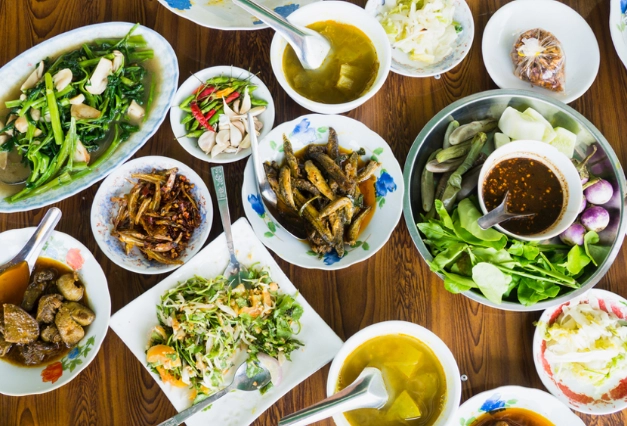
Is Myanmar food very spicy?
It can be, but the heat is often customizable and different from Thai or Indian spice. Fresh chilies and chili powders are usually served on the side. The foundational heat often comes from a background warmth in curries or the sharp bite of pickled ginger and garlic in salads. You control the final fire level.
Is Myanmar food safe for tourists with sensitive stomachs?
Generally, yes, if you follow basic rules. Stick to busy places with high turnover. Eat cooked foods that are served piping hot. Be cautious with pre-cut raw vegetables in salads that may have been washed in local water. Drink only bottled or purified water. I found that starting with milder, cooked dishes like Shan noodles or lentil soups helps your system adjust before diving into more complex salads.
Myanmar food is an adventure. It asks you to engage, to mix, to taste boldly. It won't always be what you expect—sometimes it's subtler, sometimes it's funkier, sometimes it's just a perfect bowl of noodles that hits the spot in a way you can't explain. Don't just look for a meal; look for the experience around it—the clatter of the tea shop, the sizzle of the street stall, the shared table with strangers. That's where you'll find the real flavor of the country.
Start with mohinga at sunrise. Be brave with the tea leaf salad. You might just discover your new favorite cuisine hiding in plain sight.