Explore the Flavors
- The Heartbeat of the Islands: Core Ingredients You Can't Avoid
- Not Just Dishes, but Ways of Cooking: The 'Umu and Lovo
- A Tour of Must-Try Typical Polynesian Dishes
- The Heavy Hitters (The Mains)
- The Supporting Cast (Sides, Salads, Snacks)
- How to Navigate Polynesian Food: A Practical Guide for Travelers
- Answering Your Burning Questions (FAQ)
- Bringing the Islands Home: Can You Cook It?
So you want to know about typical Polynesian food. Maybe you're planning a trip to Hawaii, Samoa, or Tahiti. Maybe you saw it on a cooking show. Or maybe you just tried that sweet and sour sauce at a chain restaurant and thought, "Is this it?" Let me tell you, the real deal is so much more profound, simple, and deeply connected to the ocean and land than what's often sold as "tropical" fare elsewhere. It's food born from voyagers who navigated by the stars, living on islands where every resource is precious.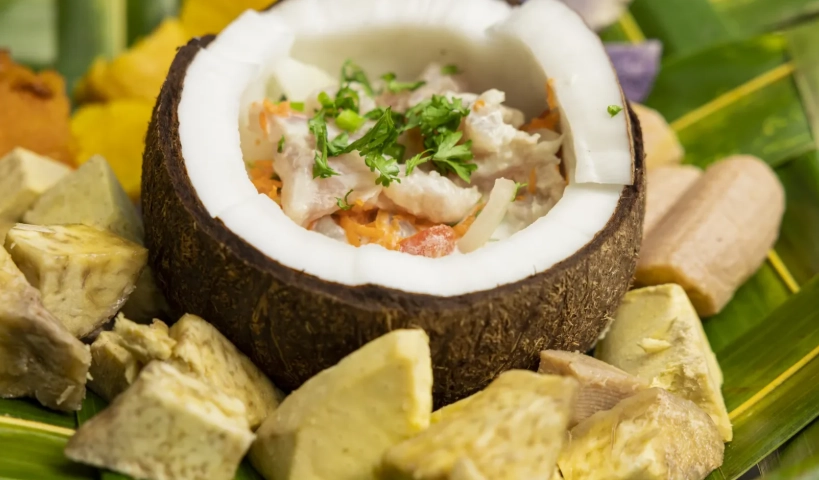
I remember my first real encounter. It wasn't at a resort buffet. It was at a family gathering in a backyard in Auckland, New Zealand, with a Samoan friend. An earth oven, an 'umu, was steaming in the corner. The flavors weren't about overpowering sweetness; they were about the earthy taste of taro, the smokiness of the pork, the fresh bite of raw fish in coconut cream. It was communal, unpretentious, and incredibly satisfying in a way that felt ancient. That's what we're talking about here.
The Heartbeat of the Islands: Core Ingredients You Can't Avoid
You can't understand typical Polynesian food without knowing what grows and swims there. Forget about imported fancy stuff for a second. The foundation is stunningly simple, which is where its beauty lies.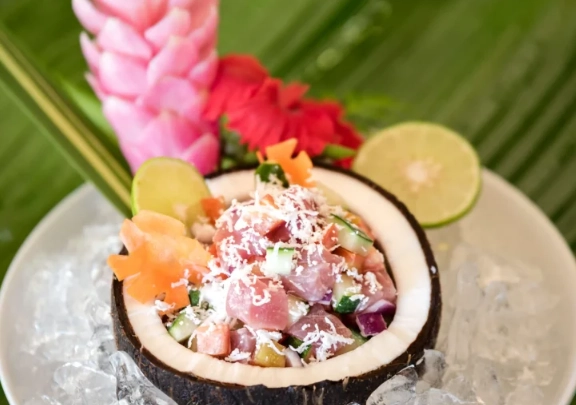
Taro (Kalo, Talo): This isn't just a side dish. It's the literal and cultural lifeblood. The starchy corm is boiled, steamed, or baked and then pounded into a paste called poi in Hawaii. Poi is an acquired taste—it's slightly sour, grayish-purple, and has a sticky, paste-like consistency. Some visitors find it bland or odd. I did at first. But when you eat it with rich, salty meats, it makes perfect sense. It cuts through the fat and grounds the meal. In Samoa and Tonga, taro is often just boiled or roasted as a chunkier side, similar to potato but with a denser, nuttier flavor.
Coconut (Niu): The ultimate utility player. Water for drinking, meat for eating, milk and cream for cooking, oil for frying, leaves for weaving. Fresh coconut cream, squeezed from grated mature coconut meat, is the magic sauce. It's not the sweetened, canned stuff. It's rich, fatty, and forms the base for countless dishes, from faiai fe'e (octopus in coconut cream) to po'e (a fruit pudding).
Seafood, Obviously: The Pacific is the pantry. Tuna (ahi, ahi), mahi-mahi, parrotfish, octopus, shellfish. Preparation is often minimal to let the quality shine: raw in salads like ota ika (in Fiji/Cook Islands) or kokoda (Fiji), simply grilled over hot rocks, or steamed in leaves with coconut milk.
Breadfruit ('Ulu): A giant, starchy fruit that, when cooked, tastes like a cross between fresh bread and potato. It can be roasted, fried, boiled, or fermented. During seasons of plenty, it's a crucial carbohydrate source.
Then you have the proteins. Pork is king for celebrations. Chicken is common. But historically, protein was often smaller—fish, shellfish, birds. The arrival of Europeans brought cattle, sheep, and corned beef (which became wildly popular in the form of pisupo in Samoa).
Not Just Dishes, but Ways of Cooking: The 'Umu and Lovo
This is where typical Polynesian food separates from just using similar ingredients. The ancient oven defines the flavor profile.
The earth oven (called 'umu in Samoa, lovo in Fiji, imu in Hawaii, hangi in Maori cuisine) is a masterpiece of low-tech, high-result cooking. You dig a pit, heat stones in a fierce fire for hours, then place the food—wrapped in banana leaves, taro leaves, or sometimes cloth—on the hot stones. It's covered with more leaves, mats, and earth to trap the steam. It cooks for several hours.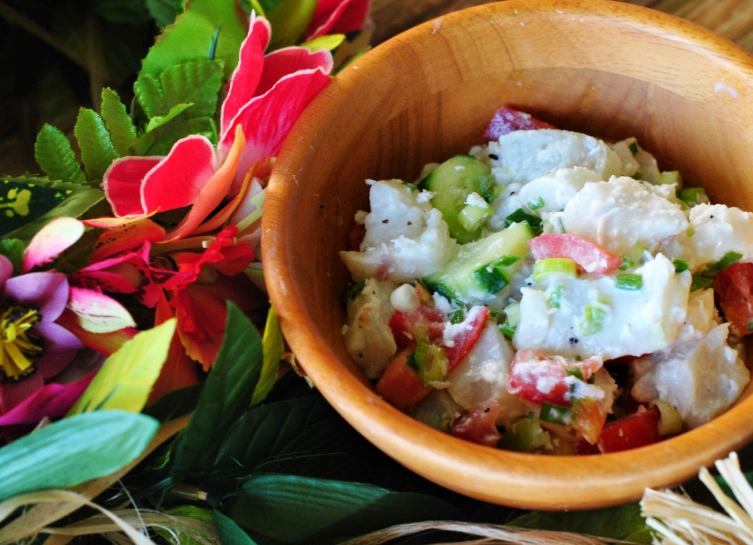
The result? Meat so tender it falls apart, infused with a gentle smokiness from the leaves. Vegetables steam in their own juices. Everything is infused with a communal, earthy essence. It's not a fast food method; it's an all-day event centered around family and community. The taste is impossible to replicate perfectly in a modern oven. That smoky, steamed tenderness is the soul of many celebration foods.
A Tour of Must-Try Typical Polynesian Dishes
Let's get specific. Here are some dishes you'll encounter across the islands. Think of this as your tasting menu.
The Heavy Hitters (The Mains)
Kalua Pig (Hawaii): The star of the luau. A whole pig, seasoned traditionally with just sea salt (and sometimes liquid smoke for modern imitations), slow-cooked in the imu until the meat is shredded and smoky. It's often served with poi and lomi lomi salmon. The real stuff, from a proper imu, has a flavor no oven-roasted pork can match.
Palusami (Samoa, Fiji, and elsewhere): This might be my personal favorite. It's a simple parcel: young taro leaves (or spinach if taro leaves aren't available) filled with a mix of onion and rich coconut cream, sometimes with corned beef or fish added. It's wrapped into a tight bundle and baked, usually in an 'umu. The coconut cream curdles and sets, creating a savory, creamy, slightly fibrous sauce around the softened leaves. It's rich, comforting, and utterly delicious. A must-try.
Poisson Cru (Tahiti): Tahiti's iconic contribution. Fresh raw tuna or other firm fish is "cooked" in lime juice and then mixed with diced vegetables (tomato, cucumber, onion) and soaked in fresh coconut milk. It's light, refreshing, citrusy, and creamy all at once. The French influence (Tahiti is part of French Polynesia) is seen in the name and the occasional addition of a dash of olive oil, but the soul is Polynesian.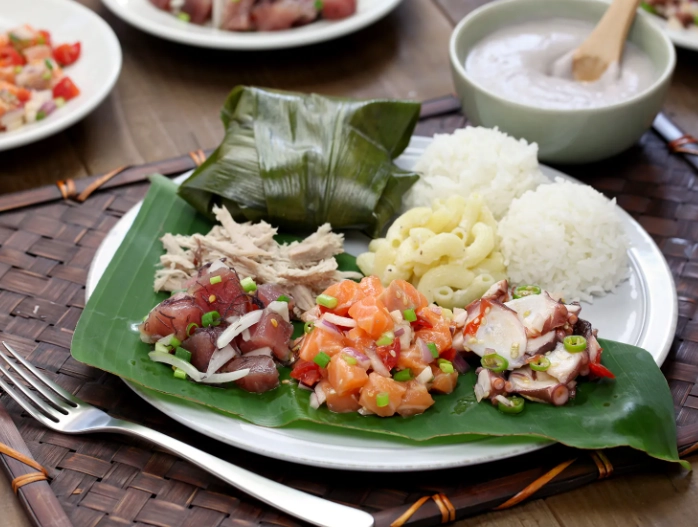
A Quick Reality Check on "Sweet and Sour"
Let's address the elephant in the room. The bright red, cloyingly sweet "Polynesian sauce" you find at some American fast-food or chain restaurants? It has almost zero connection to authentic typical Polynesian food. It's a mid-20th century American invention, playing on a romanticized "tiki" aesthetic. Real Polynesian flavors are about the natural sweetness of coconut, the tang of fermentation or citrus, and the savoriness of earth-cooked meats—not corn syrup and food coloring. Don't let that be your reference point.
The Supporting Cast (Sides, Salads, Snacks)
Poi (Hawaii): We talked about it. It's the staple. Fresh poi is sweeter and milder; it ferments over a few days becoming tangier. Locals often have strong preferences for "one-finger" (thicker) or "two-finger" (thinner) poi, based on its consistency.
Lomi Lomi Salmon (Hawaii): A vibrant, salty salad of diced salted salmon, tomatoes, and sweet Maui onions, all massaged together ("lomi lomi" means to massage). It's a refreshing, salty counterpoint to rich kalua pig.
'Ota 'Ika (Tonga) / Kokoda (Fiji): Variations on the raw fish theme. Fresh fish marinated in citrus (lime or lemon), then mixed with coconut milk, onion, tomato, and sometimes chili. It's the Pacific's answer to ceviche, but creamier.
Panipopo (Samoa): A beloved sweet treat. Soft dough buns baked in a bath of sweet coconut cream and sugar syrup, so they come out sticky, sweet, and gooey. It's comfort food at its finest.
How to Navigate Polynesian Food: A Practical Guide for Travelers
Okay, so you're convinced. You're going to the islands. Where do you find this authentic typical Polynesian food and how do you eat it?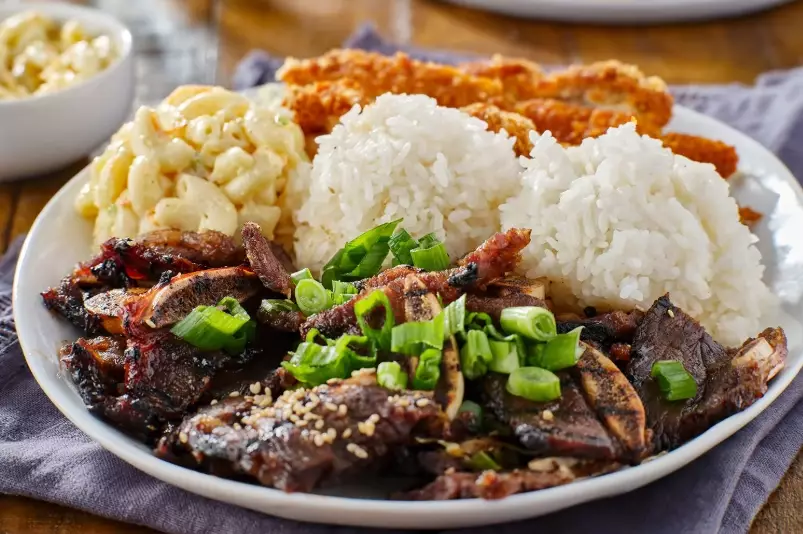
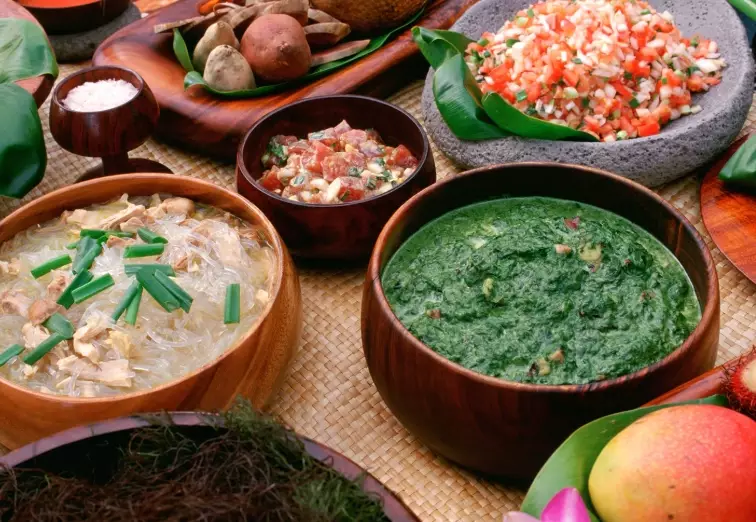
Go to a Local Market: The Makawao Farmers Market on Maui, the Fugalei Market in Apia (Samoa), the Papeete Market in Tahiti. This is where you'll see the real ingredients: piles of taro, bundles of taro leaves, heaps of fresh fish, and women selling homemade treats like panipopo or palusami. It's a sensory overload in the best way.
Find the "Faleoloa" or Local Eateries: In Samoa, look for small, often open-sided shops called faleoloa. In Hawaii, seek out "plate lunch" spots or smaller, family-run restaurants away from the resort strips. Look for menus written on whiteboards, not glossy brochures. Order the "plate"—it'll usually give you a protein, a scoop of rice, and a macaroni salad (a local favorite, a post-colonial addition).
Be Adventurous, but Ask: Don't be shy to ask what something is. Locals are usually proud to share their food culture. If you're invited to a home or a village event (fa'alavelave in Samoa), consider it a great honor. Observe, follow lead on how to eat, and always show gratitude.
Polynesian Food by Island: A Quick-Reference Table
| Island/Group | Signature Dish | Must-Try Staple | Unique Twist |
|---|---|---|---|
| Hawaii | Kalua Pig & Poi | Lomi Lomi Salmon | Strong Japanese/Asian fusion influence in modern cuisine (e.g., Spam musubi, loco moco). |
| Samoa | Palusami | Fa'apapa (coconut bread) | Love for canned corned beef (pisupo). Hearty, filling meals. |
| Tahiti | Poisson Cru | Firi Firi (donuts) | Distinct French influence in presentation and use of baguettes. |
| Tonga | 'Ota 'Ika | Lu Pulu (corned beef in taro leaves) | Emphasis on underground oven (umu) for Sunday feasts. |
| Fiji | Kokoda & Lovo Feast | Rourou (taro leaf soup) | Clear Indian influence from indentured laborers (curries, roti). |
| Aotearoa (Māori) | Hangi (earth-cooked feast) | Rewena Paraoa (sourdough bread) | Unique ingredients like kumara (sweet potato) and puha (sow thistle). |
Answering Your Burning Questions (FAQ)
Bringing the Islands Home: Can You Cook It?
You can approximate it, even without a backyard pit. The key is sourcing authentic ingredients and respecting the simplicity.
- Taro Root: Find it in Asian or specialty markets. Be cautious—some varieties must be cooked thoroughly to remove calcium oxalate crystals that can irritate the mouth. Buying frozen, pre-cooked taro is a safe bet.
- Coconut Cream: Look for unsweetened, pure coconut cream in cans (like the Chaokoh or Savoy brands), not "cream of coconut" which is sweetened for cocktails.
- Ti or Banana Leaves: Available frozen in many international markets. They're for wrapping and imparting flavor, not eaten.
A Simple Home Recipe Try: Easy Palusami-Inspired Packets
- Get some frozen spinach (thawed and squeezed dry) or fresh baby spinach.
- Mix it with a can of unsweetened coconut cream, a diced onion, and a pinch of salt.
- Add chunks of canned tuna or corned beef if you like.
- Place spoonfuls on squares of aluminum foil (traditionalists use banana leaves, but foil works).
- Fold into tight packets and bake at 375°F (190°C) for 25-30 minutes until hot and bubbly.
- Serve over rice. It's not 100% authentic, but it captures the creamy, savory spirit.
The Modern Evolution
Typical Polynesian food isn't stuck in the past. There's a fantastic modern renaissance. Chefs like Sam Choy in Hawaii or Robert Oliver in Fiji are championing "pacific rim" or modern indigenous cuisine. They take those core ingredients—taro, coconut, fresh fish—and present them with contemporary techniques and global influences. Think taro gnocchi, coconut-crusted mahi-mahi with a local fruit salsa, or deconstructed versions of classic dishes. This isn't abandoning tradition; it's evolving it, often with a strong focus on sustainability and local sourcing. The Tourism Fiji food page showcases this blend of traditional lovo and modern Fijian cooking beautifully.
So, what is typical Polynesian food, really? It's not a single recipe. It's a culinary philosophy. It's about resourcefulness, using what the land and sea provide with deep respect. It's about community, where cooking is a shared labor and eating is a communal joy. It's about flavors that are earthy, creamy, fresh, and direct.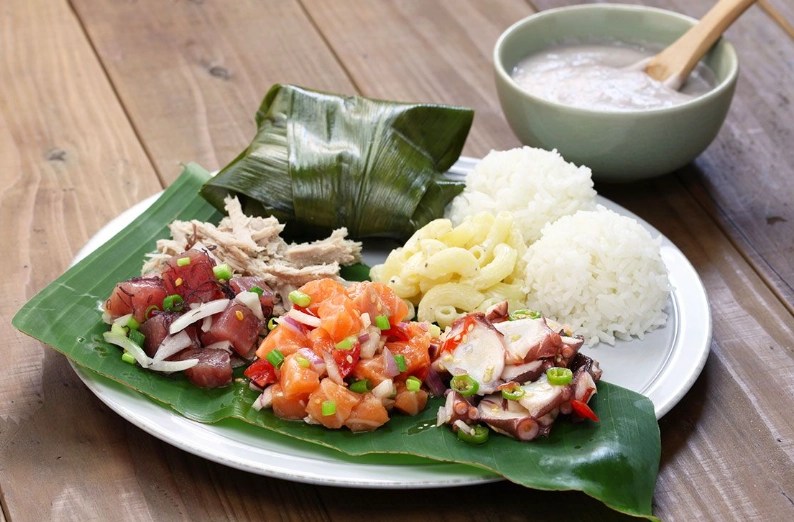
It's the taste of the 'umu, the tang of fresh poi, the richness of coconut cream on just-caught fish. It has its simple, starchy moments that might not wow you at first bite, but grow on you. And it has its spectacular, celebratory feasts that are unforgettable. To truly know it, you have to look beyond the tourist luau and seek out the markets, the local plates, and if you're lucky, the home kitchens. That's where the real, enduring, and delicious story of typical Polynesian food is found.
It's a cuisine that tells the story of its people—voyagers, navigators, and islanders. And that story tastes pretty amazing.