Let's be honest. Trying to pick where to go in Asia is like staring at a menu with a hundred amazing dishes when you're starving. Everything looks good, and the fear of missing out is real. Should you chase temples, crash on a perfect beach, get lost in a mega-city, or hike through jungles? The good news—and the problem—is that Asia has all of that, and then some.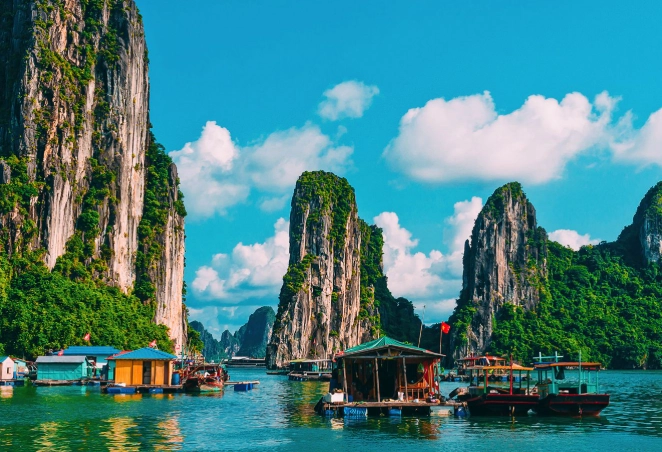
I've spent years traveling across this continent, from the frozen north of Hokkaido to the steamy islands of Indonesia. I've had trips that felt like a dream and a couple that were, well, learning experiences (more on that later). This guide isn't just a list. It's a conversation. We'll talk about the iconic spots you've seen on Instagram, sure, but also the quieter places that give you that "I can't believe I'm here" feeling. We'll get into the nitty-gritty of visas, budgets, and how not to accidentally offend someone. My goal is to help you match a destination to your travel style, because the best places to go in Asia are the ones that feel right for you.
The Core Idea: Asia isn't a monolith. It's a collection of wildly different worlds. The chaos of Delhi has almost nothing in common with the orderly calm of Singapore. The misty mountains of Nepal are a different planet from the skyscrapers of Shanghai. Your first step is to ask yourself what kind of travel fuel you need right now. Is it relaxation, cultural immersion, adventure, or a food coma?
Quick Guide to This Article
Breaking Down Asia by Vibe: Where Does Your Dream Trip Live?
To make sense of it all, let's group some of the top contenders by what they're famously good at. Think of this as your initial matchmaking service.
For the Culture & History Buffs
If your idea of a good time involves ancient stones, intricate art, and stories that span millennia, you're in the right continent.
Japan is a no-brainer, but it's popular for a reason. Kyoto is the poster child, with Fushimi Inari's thousand red gates and the golden Kinkaku-ji. But don't sleep on Nara, where sacred deer roam free around temples older than some countries, or Kanazawa for a taste of the samurai era. The official Japan National Tourism Organization site is an incredibly detailed resource for planning. A personal note: Tokyo's Meiji Shrine, nestled in a forest right in the middle of the insane Shibuya scramble, is a perfect example of Japan's blend of ancient and hyper-modern. It's a spiritual reset button.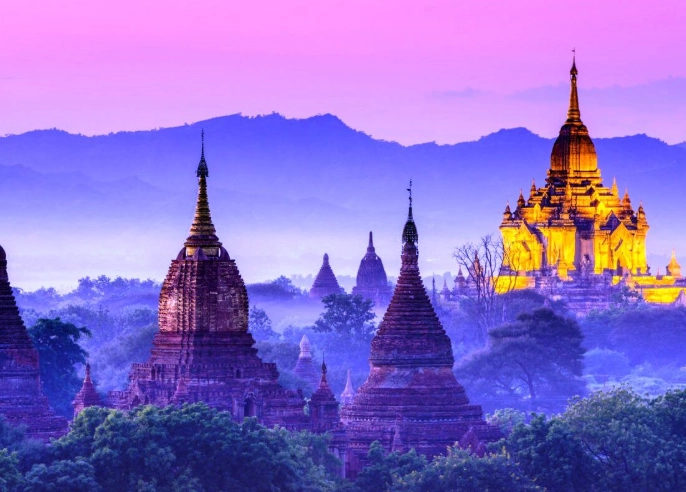
Cambodia's Angkor Archaeological Park is a single place that can justify a trip across the world. Angkor Wat at sunrise is a cliché for a reason—it's breathtaking. But spend a few days. Ta Prohm, where giant tree roots strangle the ruins, and the smiling faces of Bayon are just as powerful. It's humbling. Pro tip: Get a 3-day pass, hire a tuk-tuk driver for the duration, and explore beyond the main circuit. The crowds thin out, and the magic amplifies.
My first time at Angkor Wat, I made the rookie mistake of only going for the sunrise. The place was packed with tripods. I went back alone in the late afternoon a few days later, sat on a crumbling wall away from the main path, and just listened to the wind and the distant monks chanting. That was the moment it hit me. Sometimes the best places to go in Asia are the same as everyone else's—you just have to visit them on your own terms.
India... where do you even start? The Taj Mahal in Agra is a monument to love that somehow exceeds every photo. Varanasi, on the banks of the Ganges, is an intense, sensory-overload experience of life, death, and faith. For intricate architecture, the palaces and forts of Rajasthan (Jaipur, Udaipur, Jodhpur) are unbeatable. It's not an easy destination—it challenges you—but it rewards you with memories that don't fade. The Incredible India portal is a great place to begin exploring the possibilities.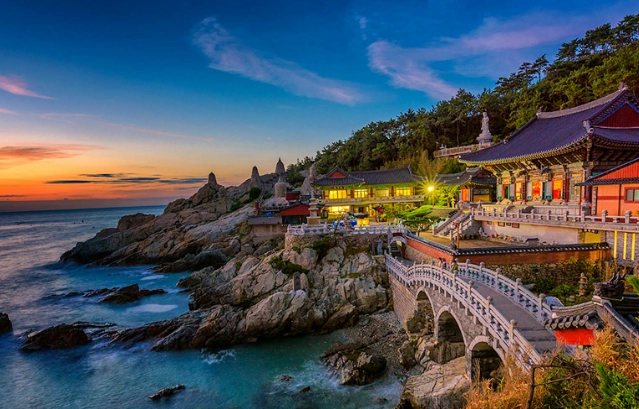
For the Beach & Island Paradise Seekers
Turquoise water, white sand, and a hammock. Sometimes that's all you need.
Thailand built the template for the tropical island dream. Phuket is the big, bustling gateway, but I'd urge you to look at the Andaman Coast for more character. Krabi's Railay Beach, accessible only by boat, has those iconic limestone karsts. Koh Lanta is more laid-back and family-friendly. On the Gulf Coast, the islands of Koh Samui, Koh Phangan, and Koh Tao offer their own mix of luxury, full-moon parties, and world-class diving, respectively. The Tourism Authority of Thailand has reliable info on all regions.
Indonesia is an archipelago of over 17,000 islands. Bali is the superstar, and for good reason. The south has the surf and Seminyak's chic cafes, Ubud is the cultural and jungle heartland, and the east and north coasts are quieter. But Indonesia is so much more. Lombok and the Gili Islands (Gili Trawangan, Gili Air, Gili Meno) offer a slightly more rustic, less-developed vibe than parts of Bali. For something truly otherworldly, Komodo Island is home to the dragon-like Komodo monitors, and the surrounding waters are a diver's paradise.
A Reality Check on Paradise: The "perfect" beach often comes with trade-offs. The most stunning, secluded coves might have limited facilities. The islands with the best nightlife might be noisy. Think about what "paradise" means to you. Is it absolute silence and a book, or is it a social vibe with sunset cocktails?
The Philippines packs in over 7,000 islands. Palawan, consistently topping "world's best" lists, is home to the Underground River and the breathtaking lagoons of El Nido and Coron. Boracay, after a major rehabilitation, has reclaimed its famous White Beach with stricter environmental rules. Cebu is great for diving with whale sharks in Oslob (controversial, but it happens) and canyoneering in Kawasan Falls.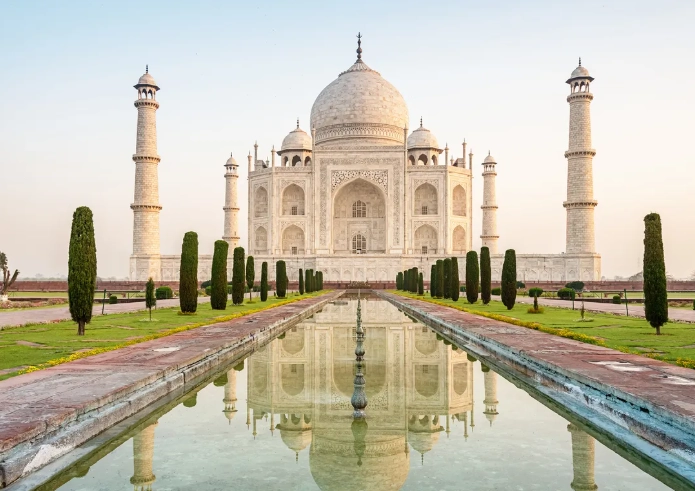
For the Urban Explorers & Food Fanatics
Some cities are destinations unto themselves. They buzz, they feed you, and they never sleep.
Tokyo, Japan is a universe in a city. You can spend a morning in a serene garden, an afternoon in a cutting-edge art museum, and a night in a tiny eight-seat bar in Shinjuku. The food is a pilgrimage, from life-changing sushi at the Tsukiji outer market (the inner market moved) to perfect ramen in a back alley. Each neighborhood has a distinct personality: high-tech Akihabara, trendy Harajuku, upscale Ginza.
It's a lot. In a good way.
Bangkok, Thailand is the city that grabs all your senses at once. The scent of street food (pad thai, mango sticky rice, smoky grilled skewers) mixes with temple incense and tuk-tuk exhaust. The Grand Palace dazzles, the Chao Phraya River provides a breezy escape, and the night markets are a treasure hunt. I still dream about the boat noodles I had from a stall under a bridge near Victory Monument. Total cost? Maybe 50 cents. Flavor? Priceless.
Singapore is Asia for beginners, in the best possible way. It's clean, efficient, English-speaking, and a culinary powerhouse. The hawker centers (like Lau Pa Sat or Maxwell Food Centre) are where you'll eat like a king on a budget—Hainanese chicken rice, chili crab, laksa. It's a garden city with futuristic wonders like the Supertree Grove at Gardens by the Bay. It's not the "cheap" Asia of backpacks and hostels; it's polished, modern, and incredibly tasty.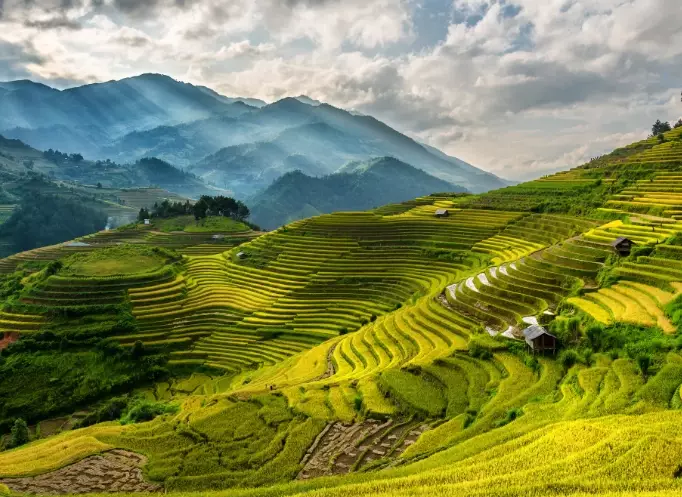
For the Mountain & Adventure Lovers
If your soul needs big landscapes and physical challenge, look north and inland.
Nepal is synonymous with the Himalayas. The Annapurna Circuit and Everest Base Camp treks are legendary for a reason. But it's not just for hardcore mountaineers. The Pokhara region offers shorter, stunning treks with tea-house stays. The culture in Kathmandu's Durbar Square and the spiritual vibe of Boudhanath Stupa are integral parts of the experience. It's raw, powerful, and profoundly beautiful.
Vietnam isn't just beaches and pho. Sapa, in the northwest, is all about terraced rice fields, ethnic minority villages, and misty peaks. You can do homestays and trek through landscapes that look painted. Further south, the Ha Giang Loop is an epic motorbike journey through some of the most dramatic mountain passes in Southeast Asia. Not for the faint of heart, but unforgettable.
Adventure Means Preparation: Trips like these require more planning. Check seasons (monsoon vs. dry), get proper travel insurance that covers trekking at altitude, and be ready for basic conditions. The reward is worth the extra effort.
The Practical Stuff: Making Your Asia Trip Actually Work
Dreaming is fun, but logistics are what get you there. Here’s the down-and-dirty of planning.
When to Go? It's All About the Seasons.
Asia has monsoons. Ignoring them is a recipe for soggy disappointment.
- Southeast Asia (Thailand, Vietnam, Cambodia, Laos): Generally, November to February is dry and cool (high season). March to May is brutally hot. June to October is the rainy season, which can mean short, heavy downpours in the afternoon—still travelable, and cheaper, but with more humidity and potential for disruptions.
- Indonesia & Malaysia: More complex due to the archipelago. Generally, April to October is drier for most places (like Bali, Java), but regions have their own micro-climates.
- East Asia (Japan, Korea, China): Spring (March-May) for cherry blossoms and fall (Sept-Nov) for autumn colors are spectacular (and crowded). Summers are hot and humid, winters can be very cold, especially in the north.
- South Asia (India, Nepal, Sri Lanka): October to March is the prime time, avoiding the extreme heat and the summer monsoon.
There's no single "best" time for all of Asia. Your perfect time depends entirely on your chosen destinations.
Budgeting: From Shoestring to Splurge
Asia can be incredibly cheap, or astronomically expensive. You control the dial.
Budget-Friendly Havens: If your wallet is thin, focus on Thailand (outside mega-resorts), Vietnam, Cambodia, Laos, and Indonesia (outside luxury Bali hotels). Here, you can live well on $30-50 a day: guesthouses, street food, local buses, and free temple visits.
Mid-Range & Splurge Destinations: Japan, Singapore, Hong Kong, and South Korea are in a different league. Comfortable travel here starts at $80-150+ per day. Accommodation and transport are the big costs, though food can still be reasonable if you mix high-end with market eats.
Visa & Entry Requirements
This is crucial and changes often. Always check the official government website of the country you're visiting or your own government's travel advisory page for the most current info. As a general guide:
- Visa on Arrival / Easy E-Visa: Thailand, Indonesia, Cambodia, Laos, Sri Lanka (for tourism) offer this for many passports.
- Pre-Arranged Visa Required: Vietnam (e-visa available for most), India (e-visa available), China (requires planning ahead).
- Visa-Free for Many: Philippines, Malaysia, Singapore, Japan, South Korea offer visa-free entry for numerous nationalities for short stays.
I once assumed I could get a Vietnamese visa on arrival for a last-minute trip. I was wrong for my specific nationality at the time. A stressful 48 hours and an expensive expedited service later, I learned my lesson. Check, double-check, and get it sorted early.
Beyond the Big Names: A Few Hidden(ish) Gems
Want to step slightly off the well-trodden path? These places offer incredible experiences with (slightly) fewer crowds.
- Taiwan: An absolute gem often overlooked. Incredible food night markets (Shilin in Taipei!), friendly people, stunning natural beauty like Taroko Gorge, and a fascinating blend of Chinese, Japanese, and indigenous influences. It's clean, safe, and easy to navigate.
- Malaysia: The ultimate fusion. You get the modern skyscrapers of Kuala Lumpur, the historic colonial charm of Melaka, the food paradise of Penang (George Town's street art and cuisine are legendary), and the pristine jungles and beaches of Borneo (Sabah) where you can see orangutans.
- Sri Lanka: The "Teardrop of India" packs ancient ruins (Sigiriya Rock Fortress), incredible wildlife (safaris in Yala National Park), scenic train rides through tea plantations, and beautiful beaches. It's recovering wonderfully and deserves a spot on any list of great places to go in Asia.
- Kyushu, Japan: Everyone goes to Tokyo-Kyoto-Osaka. Kyushu, the southwesternmost main island, offers active volcanoes (Mount Aso), fantastic hot spring towns (Beppu, Kurokawa Onsen), the historic port city of Nagasaki, and arguably some of Japan's best ramen (Hakata tonkotsu!).
Your Asia Travel Questions, Answered
Here are the things I get asked most, or wish I'd known before my first trip.
Is Asia safe for solo travelers, especially women?
Generally, yes, very. Countries like Japan, Singapore, Taiwan, and South Korea are among the safest in the world. Southeast Asia is largely safe for solo travelers, with common-sense precautions (watch your bag in crowded places, don't get recklessly drunk). I've traveled solo extensively as a woman and felt more at ease walking at night in many Asian cities than in some European ones. Do your research on local customs to dress appropriately, especially in temples and rural areas.
What's the one thing I should pack?
A universal power adapter with USB ports. Outlets vary (UK, US, EU types can all pop up). And pack light, breathable clothing that you can layer. You'll buy cool stuff there anyway.
How do I handle the language barrier?
It's rarely a big issue. In major tourist centers, basic English is common. Learn a few key phrases ("hello," "thank you," "how much?")—the effort is appreciated. Google Translate's camera function is a game-changer for menus. A smile and patience go a very, very long way.
Is street food safe?
It's often the best and safest food you'll eat! Look for stalls with high turnover (the food is fresh), where the food is cooked hot in front of you. Avoid pre-cut fruit or dishes that have been sitting out. My rule: if it's busy with locals, it's probably a good bet. I've eaten street food for months across Asia and only had a minor issue once.
How can I be a respectful visitor?
This is huge. A few basics: Dress modestly at religious sites (cover shoulders and knees). Remove your shoes when required (homes, some temples, certain shops). Use your right hand for giving and receiving things in many South and Southeast Asian countries (the left is considered unclean). Don't touch people on the head. Be discreet with public displays of affection. A little awareness makes a massive difference.
Final Thoughts: Just Go
My first major Asia trip was to Thailand. I was nervous, it felt so far away and unknown. That trip changed the trajectory of my life. It opened up a curiosity about the world that hasn't closed since. Asia has a way of doing that. It's vibrant, chaotic, serene, ancient, and futuristic—often all on the same street.
So do your research, get your vaccines and visas in order, pack an open mind alongside your sunscreen, and book the ticket. The best place to go in Asia is the one that calls to you. Listen to it. Your adventure is waiting.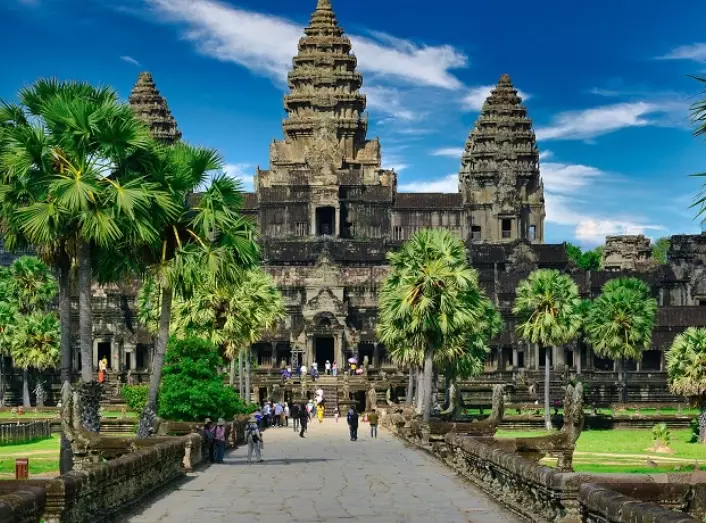
And trust me, you'll be planning your return before you've even left.
Reader Comments