In This Article
- The Core of the Culture: What Truly Defines Traditional Hawaiian Food?
- The Plate Lunch & Local Grinds: Hawaii's Everyday Comfort Food
- Beyond the Plate: Snacks, Sides, and Sweets You Can't Miss
- Navigating the Modern Landscape: FAQs for the Curious Eater
- The Final Bite: Respecting the Food and the Culture
Let's be real for a second. When you think of typical Hawaiian food, what pops into your head? Is it just a pineapple ring on a ham steak? If that's where your mind goes, I totally get it—that's what a lot of mainland menus would have you believe. But after spending a good chunk of time eating my way through the islands, I can tell you the real deal is so much more interesting, complex, and frankly, delicious. It's a story on a plate, and it's not just one story either.
Hawaiian cuisine is this wild, beautiful tapestry woven from the foods of the original Polynesian voyagers, the later influences of immigrant laborers from places like Japan, China, Portugal, and the Philippines, and of course, the modern American twist. Trying to pin down just one "typical" dish is impossible. Instead, you get this incredible range, from foods that have been there for over a thousand years to plates that came together in the plantation era. This guide is my attempt to walk you through it all, to separate the tourist traps from the truly authentic eats, and to maybe make you crave a plate lunch by the time you're done reading.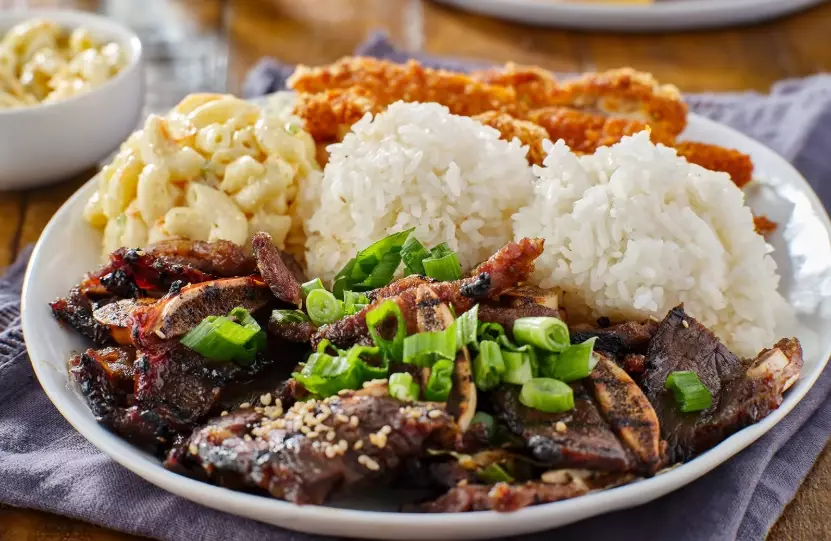
The Core of the Culture: What Truly Defines Traditional Hawaiian Food?
First things first, let's talk about the old ways.
Before contact, the Hawaiian diet was built on what the incredible environment of the islands provided. We're talking about a cuisine born from necessity and deep respect for the 'aina (land). The absolute bedrock of this traditional diet is what's called the "canoe plants." These are the crops—taro, sweet potato, breadfruit, coconut, sugarcane—that the very first Polynesian settlers brought with them in their voyaging canoes. Their survival depended on these plants, and they shaped the culture around them.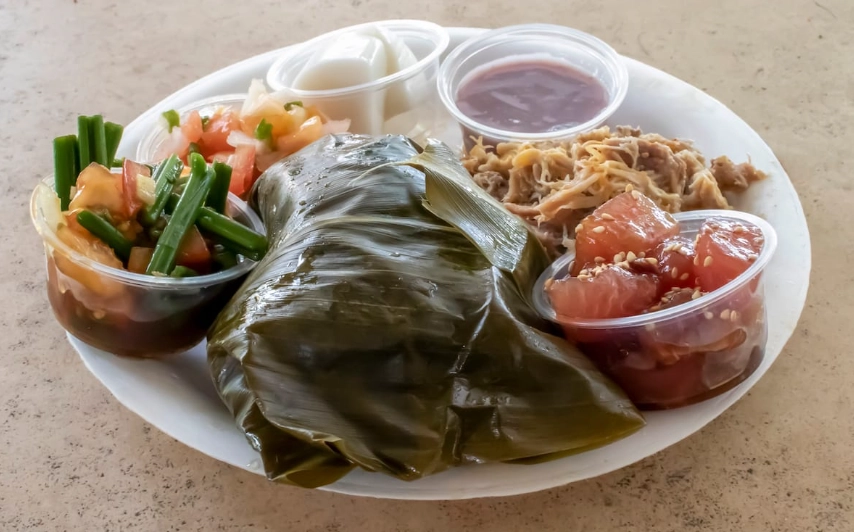
The Canoe Plant Hall of Fame
If you want to understand traditional typical Hawaiian food, you have to start with these staples. They're not just ingredients; they're cultural pillars.
- Taro (Kalo): More than a food, taro is considered the elder brother of the Hawaiian people in creation stories. The root is steamed and pounded into poi, that iconic, sticky, purple-gray paste. Its taste is mild, slightly sour, and earthy. To be honest, the texture can be a hurdle for first-timers—it's kind of like wallpaper paste. But it's meant to be eaten with flavorful, rich foods like kalua pig, where it acts as the perfect, slightly tangy counterpoint. Don't knock it 'til you've tried it that way.
- Sweet Potato ('Uala): The Hawaiian varieties often have purple flesh and are sweeter than the orange ones you're used to. They were baked in imu (underground ovens) or steamed.
- Breadfruit ('Ulu): This starchy fruit is incredibly versatile. When cooked, its texture and mild flavor can mimic potatoes or bread. It can be roasted, fried into chips, or turned into a porridge.
- Coconut (Niu): Used for everything—water for drinking, meat for eating, milk for cooking, and husks for cord.
Protein came from the ocean and the land in careful balance. The ocean provided a stunning array of fish like 'ahi (yellowfin tuna), aku (skipjack tuna), and mahi-mahi. These were often eaten raw, seasoned with sea salt and seaweed, which is the ancient precursor to modern poke. On land, the main source of meat was pork, but also chicken and sometimes dog (a practice that has long ceased). The most famous cooking method, and one you absolutely must experience, is the imu.
The Imu: Hawaii's Original Slow Cooker
An imu is an underground oven. It's a process that turns cooking into a community event. A pit is dug, stones are heated in a fire until they're blazing hot, then the embers are cleared. The food—usually a whole pig, but also breadfruit, sweet potatoes, and bananas—is wrapped in ti leaves (which add a fantastic, unique flavor) and placed on the hot stones. It's all covered with wet burlap, then dirt, and left to steam for hours. The result is kalua pig. It's not "Kahlua" like the liquor, but "kalua" meaning "to cook in an underground oven." The meat is unbelievably tender, smoky, and infused with the scent of the ti leaf. It just falls apart. If you see "kalua" on a menu, it should mean it was cooked this traditional way, though nowadays many places use an oven with liquid smoke to mimic the flavor (a decent shortcut, but not quite the same).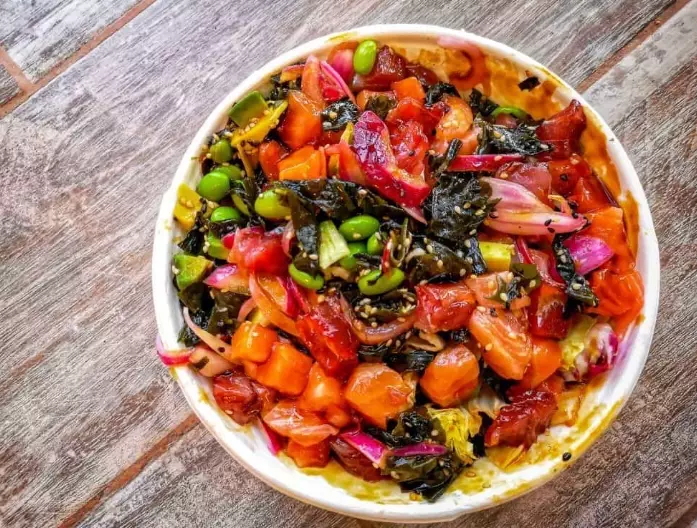
So, a truly traditional meal might be kalua pig, a bowl of poi, some steamed 'ulu, and maybe some lomi lomi salmon (a salty, tomato-and-onion salad introduced after Western contact). This is the heart of what many consider authentic typical Hawaiian food.
The Plate Lunch & Local Grinds: Hawaii's Everyday Comfort Food
Now, let's fast forward a few centuries.
While the traditional foods are revered, especially at luaus and cultural events, the typical Hawaiian food you'll find locals eating on a Tuesday is a different beast. This is the "local food" or "grindz" that evolved in the 19th and 20th centuries. Picture this: workers from all over the world—Japan, China, the Philippines, Portugal, Korea—coming to work on sugar and pineapple plantations. They brought their lunch boxes (bento) and their culinary traditions. During lunch breaks, they'd share. Cultures mixed right there in the field. What emerged is one of the greatest fusion cuisines on the planet.
The crown jewel of this fusion is the plate lunch. It's a formula so perfect it's barely changed in decades. Two scoops of rice, one scoop of macaroni salad (the creamy, simple kind, not the fancy kind with veggies), and a main protein. It's served on a styrofoam plate or in a take-out box. It's hearty, cheap, and deeply satisfying. But what are the stars of the plate lunch show?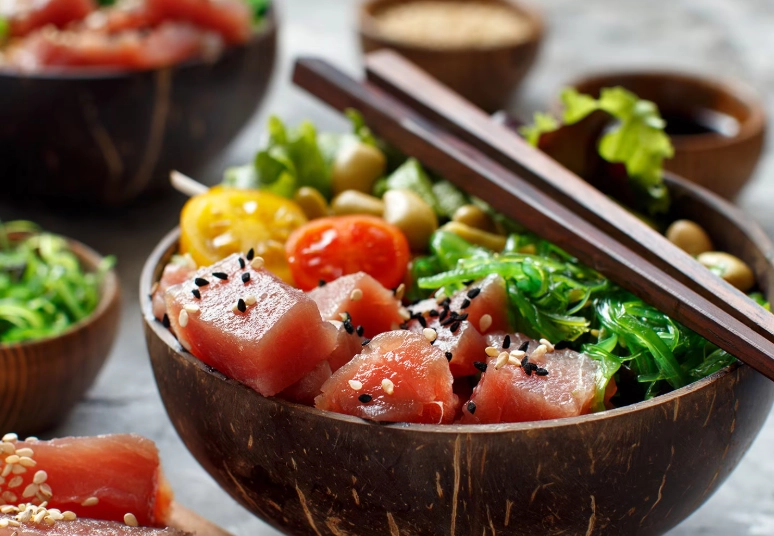
| Dish | What It Is | Its Origin Story | My Personal Take |
|---|---|---|---|
| Loco Moco | A mound of rice topped with a hamburger patty, a fried egg (runny yolk is mandatory), and all smothered in rich brown gravy. | The ultimate comfort food after a long hike. It's heavier than a weighted blanket, but sometimes you need that. | |
| Chicken Katsu | A Japanese-style breaded, deep-fried chicken cutlet, sliced and served with a tangy-sweet tonkatsu sauce. | Almost always a safe and delicious bet. The crunch of the panko breadcrumbs is everything. | |
| Kalua Pig & Cabbage | Shredded kalua pig sautéed with cabbage until tender. The cabbage soaks up all the smoky pork juices. | ||
| Garlic Shrimp | |||
| Teriyaki Beef |
Then there's poke (pronounced poh-kay, not poke like you're prodding someone). It's not just a bowl trend from the mainland. In Hawaii, poke is a way of life. It means "to slice or cut" and is essentially seasoned raw fish, usually 'ahi. The classic is shoyu poke: cubes of fresh tuna tossed with soy sauce, sesame oil, green onion, and maybe some chili pepper or seaweed. You'll find it at supermarkets, dedicated poke shops, and restaurants. The variety is endless: spicy mayo, wasabi, kimchi, Hawaiian-style with sea salt and inamona (roasted candlenut). For an incredible deep dive into the history and culture of poke, the Bishop Museum in Honolulu often has exhibits on Hawaiian foodways that are worth checking out.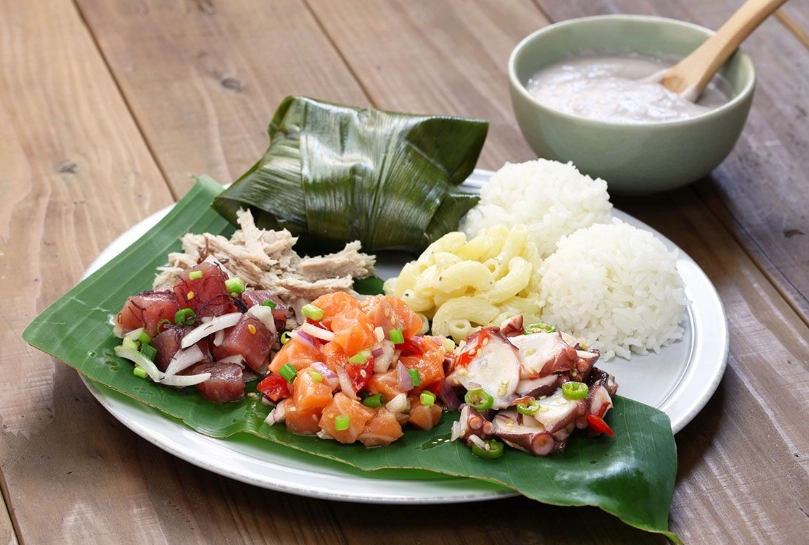
Where to Find the Real Deal (My Two Cents)
Skip the overpriced hotel luau for your first taste of local food. Go where the line is. Here's what I mean:
- Plate Lunch Spots: Look for places with "Drive-Inn," "Lunch Shop," or "Kitchen" in the name. Rainbow Drive-In on Oahu is an institution for a reason. The lines move fast.
- Food Trucks & Markets: Some of the best typical Hawaiian food comes from a window. The shrimp trucks on the North Shore, the vendors at farmers' markets like the one at Kapi'olani Community College on Saturdays, or the legendary Helena's Hawaiian Food in Honolulu (which has a James Beard award, no less).
- Okazuya: These are Japanese-inspired take-out delis that open early and sell an array of prepared foods by the piece—teriyaki meat, musubi, fried chicken, noodles. Perfect for putting together your own custom plate. Fukuya in Honolulu is a classic.
Beyond the Plate: Snacks, Sides, and Sweets You Can't Miss
Okay, you've got your main dishes down. But a big part of experiencing typical Hawaiian food is grazing on all the little things.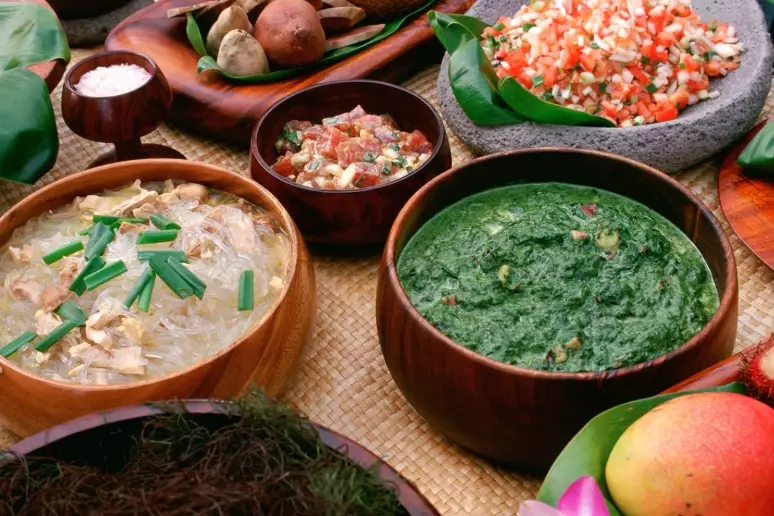
Must-Try Snacks & Sides
- Spam Musubi: This is the king of Hawaiian snacks. A block of rice topped with a slice of grilled Spam, all wrapped together with a strip of nori (seaweed). It's the perfect portable food—salty, savory, and strangely elegant in its simplicity. Don't question it, just eat it. You'll find them everywhere, from 7-Eleven to fancy markets.
- Manapua: The Hawaiian name for Chinese char siu bao—a steamed fluffy bun filled with sweet, red barbecued pork. The best ones are pillowy soft.
- Lomi Lomi Salmon: A refreshing salad of salted salmon, tomatoes, and sweet Maui onions, all diced and "massaged" together (that's what "lomi lomi" means). It cuts through the richness of other dishes.
- Haupia: A coconut milk-based pudding that's often set into firm, gelatin-like squares. It's subtly sweet and creamy, and a common dessert at luaus.
- Shave Ice: Not a snow cone. The ice is shaved so fine it's almost like powder. It's piled high in a cup and drenched with syrups in tropical flavors like li hing mui (salty dried plum), lilikoi (passion fruit), and guava. The pro move? Get it with a scoop of vanilla ice cream at the bottom and a drizzle of sweetened condensed milk on top (this is called "snow cap"). Matsumoto's on the North Shore is famous, but any local spot is good.
"The story of Hawaiian food isn't told in fancy restaurants first. It's told in lunch trucks, at beach parks, and on family tables. That's where the flavors really live."
Navigating the Modern Landscape: FAQs for the Curious Eater
I get a lot of questions from friends planning trips. Here are the big ones.
The Final Bite: Respecting the Food and the Culture
Eating in Hawaii isn't just about checking dishes off a list. It's about understanding the history on your plate. The traditional foods connect to a deep, indigenous culture and a profound relationship with the land. The local foods speak to a history of migration, labor, and communities creating something new together.
So go explore.
Try the poi. Wait in the line at the shrimp truck. Get a spam musubi from a gas station. Ask the person next to you at the counter what they recommend. The best typical Hawaiian food isn't found in a single definition; it's found in the experience of tasting all these layers of history and culture, one delicious bite at a time. And trust me, your search for that perfect plate lunch will be one of the best parts of your trip. Just remember to bring an appetite—and maybe some loose-fitting pants.