Your Korean Food Roadmap
Let's be honest. You've probably seen those "top 10" lists that pop up when you search for a Korean food list. They're fine, I guess. They'll tell you about kimchi and bulgogi and maybe bibimbap if you're lucky. But then you sit down at a Korean restaurant, flip open a menu that's longer than your arm, and suddenly you're lost. What's the difference between jjigae and tang? Is that banchan refillable? And what on earth is that sizzling stone pot everyone else seems to be ordering?
I've been there. My first time at a proper Korean BBQ place, I just pointed at a picture. It worked out okay, but I knew I was missing out. So I started digging. I asked Korean friends, pestered restaurant owners, and ate my way through more meals than I care to admit. This isn't just another list. This is the field guide I wish I'd had.
We're going way beyond the basics. We'll break down the whole ecosystem of a Korean meal, from the fiery stews that are a national obsession to the delicate flavors of royal court cuisine that most tourists never try. I'll even throw in some personal hits and misses—because not every dish is a home run for every palate. By the end, you won't just know names; you'll know what to expect, how to eat it, and what to order next.
How to Actually Use This Korean Food List
Before we dive into the dishes, let's get our bearings. Korean food isn't just a random collection of tasty things. It's a system. Understanding a few core concepts will make this whole list make a lot more sense.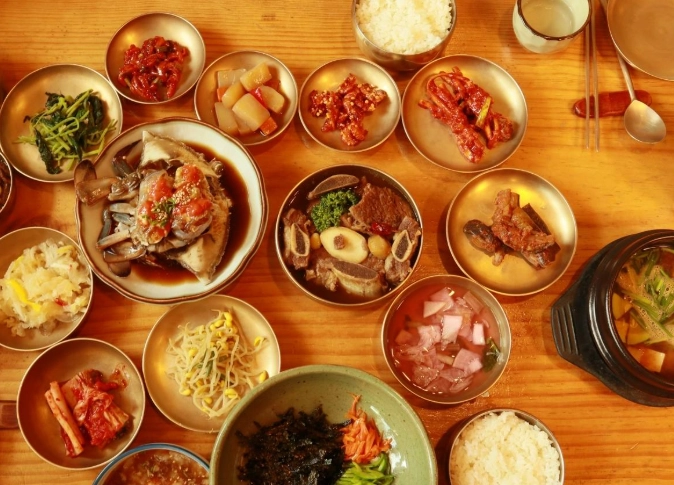
Bapsang (밥상): The Meal Table
This is the foundation. A proper Korean meal, or bapsang, is built around balance. You have your staple rice (bap), a soup or stew (guk or jjigae), a main dish or two (banchan), and a constellation of side dishes (also called banchan). It's not meant to be eaten in courses, but all together, mixing flavors and textures in every bite. When you look at a Korean food list, you're often looking at components meant to fit into this harmonious table setting.
Then there's the temperature thing. Koreans have a philosophy called "yeol-yin-chil-seung" (열인칠성), which roughly means "hot things should be hot, cold things should be cold." It's why you get a scorching hot stone bowl for bibimbap and a chilled bowl for naengmyeon (cold noodles). They take it seriously. A lukewarm soup is a sad soup.
The Main Event: A Category-by-Category Korean Food Breakdown
Okay, let's get to the good stuff. I've organized this Korean food list by the role a dish plays. This way, whether you're planning a feast or just figuring out what to order for lunch, you can find what you need.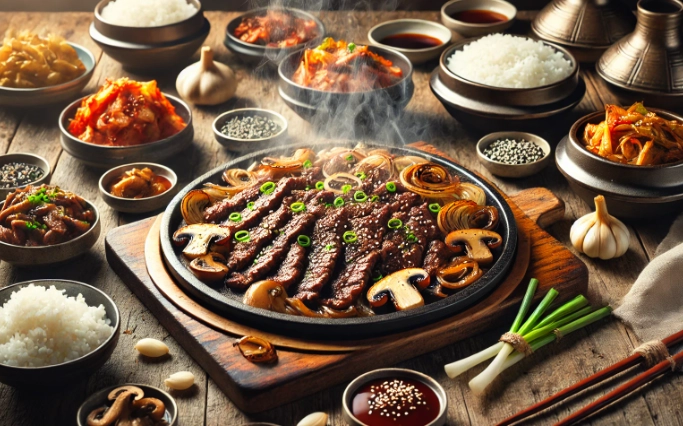
The Heart of the Meal: Rice, Noodles & Breads
This is your base, your canvas. It's not an afterthought.
Bap (밥) - Rice: Usually short-grain white rice, sticky and perfect for scooping. Bap is so central that it's also the word for "meal." But it's not just plain rice. Bibimbap (mixed rice with vegetables and meat) is the famous one. Gimbap (seaweed rice rolls) is the ultimate portable snack—think of it as Korea's answer to sushi, but often with cooked ingredients like ham, egg, and pickled radish. Kimchi bokkeumbap (kimchi fried rice) is a lifesaver for using up old kimchi and is arguably one of the best comfort foods on the planet.
Myeon (면) - Noodles: A world of their own. You have the chewy, sweet-potato starch noodles in japchae (stir-fried glass noodles), which is a must at celebrations. Then there are the cold noodle dishes: naengmyeon, which are thin, chewy buckwheat noodles served in an icy, tangy broth (often with a hard-boiled egg and a slice of Korean pear), and bibim naengmyeon, which is served with a spicy sauce instead of broth. On the hot side, jjamppong is a fiery red seafood noodle soup that will clear your sinuses.
The Soul-Warmers: Soups & Stews (Guk, Tang, Jjigae)
This is where Korean cuisine shows its depth. The differences between guk, tang, and jjigae can be subtle, but here's a rough guide:
| Type | Description | Broth Base | Key Examples |
|---|---|---|---|
| Guk (국) | Clear, lighter soup, often served as part of a daily meal alongside rice. | Anchovy, kelp, beef | Miyeokguk (seaweed soup, eaten on birthdays), Kongnamulguk (bean sprout soup) |
| Tang (탕) | Usually heartier, simmered for a long time, often with large pieces of meat or whole fish. Considered nourishing. | Bone-based, long-simmered | Samgyetang (whole chicken stuffed with rice & ginseng), Galbitang (beef short rib soup) |
| Jjigae (찌개) | The thick, robust, and often spicy stews. Served boiling hot in a stone or earthenware pot. The main event of a meal. | Varied, often with gochujang (red chili paste) or doenjang (soybean paste) | Kimchi jjigae, Sundubu jjigae (soft tofu stew), Doenjang jjigae |
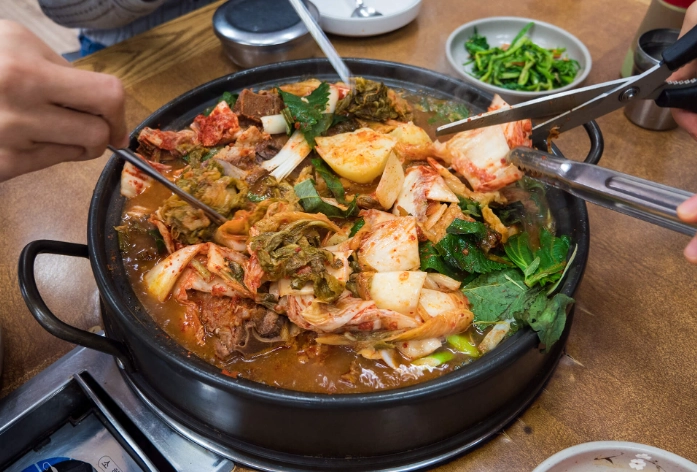
Kimchi jjigae is the king here. It's made with well-fermented (sour) kimchi, pork, tofu, and a spicy broth. It's pungent, hearty, and incredibly satisfying. Sundubu jjigae is slightly milder and features silken tofu that's so soft it's almost drinkable. You often crack a raw egg into it at the table.
A Word on Stew Spice Levels: Many Korean stews, especially jjigaes, are meant to be spicy. If you're sensitive to heat, doenjang jjigae (soybean paste stew) is a fantastic, deeply savory, and usually non-spicy alternative. Don't assume all stews are firebombs!
The Showstoppers: Grilled, Braised & Fried Mains
This is what most people dream of when they think of Korean food.
Gui (구이) - Grilled/Broiled: Korean BBQ (gogi-gui) needs little introduction. Samgyeopsal (thick, unseasoned pork belly) is the classic. You grill it yourself, dip it in salt & pepper or ssamjang (a thick paste), wrap it in lettuce with garlic and maybe a bit of kimchi. Bulgogi (marinated beef) is sweeter and more tender. Galbi (marinated short ribs) is the premium choice. But BBQ isn't just meat. Saengseon gui is grilled fish, often a simple mackerel, and it's a staple of home cooking.
Jjim & Jeongol (찜 & 전골) - Braised & Hot Pot: Galbi jjim is braised beef short ribs in a sweet, savory, and sticky sauce—it's fall-off-the-bone tender and ridiculously flavorful. Jeongol is a communal hot pot, like a more elaborate jjigae, with seafood, meats, and vegetables bubbling away at the table.
Twigim (튀김) - Fried: Korean fried chicken (chikin) is a global phenomenon for a reason. It's double-fried for an impossibly crunchy exterior that stays crispy under a glaze of sweet-spicy yangnyeom sauce or a simple soy-garlic sauce. It's a category unto itself.
The Flavor Bombs: Banchan (Side Dishes)
No Korean food list is complete without celebrating banchan. These small side dishes are refillable (usually for free) and are what make every meal unique. Kimchi is the most famous, but there are hundreds of varieties: kkakdugi (cubed radish kimchi), oi kimchi (cucumber kimchi). Beyond kimchi, you'll find kongnamul muchim (seasoned bean sprouts), sigeumchi namul (spinach salad), gamja jorim (braised potatoes), and myeolchi bokkeum (stir-fried anchovies).
Banchan Etiquette: It's perfectly fine to ask for a refill ("banchan juseyo") of your favorite side. That's what they're there for! Just try to finish what's on your plate first.
The Snack Attack: Street Food & Anju
Food you eat while walking or, crucially, with drinks (anju).
Street Food: Tteokbokki is the queen—chewy rice cakes in a sweet, spicy, and addictive red sauce, often with fish cakes and boiled eggs. Hotteok is a sweet, syrupy filled pancake that's perfect in winter. Eomuk (fish cake) skewers served in a mild broth are a comforting classic.
Anju (안주): Food specifically designed to accompany alcohol. Jokbal (braised pig's trotters) is a popular, rich choice. Nakji bokkeum (stir-fried octopus) is spicy and chewy. A simple plate of jjwaban (assorted braised dishes) or even fried chicken also qualifies as great anju.
Navigating a Korean Menu: A Practical Guide
So you have this massive Korean food list in your head now. How does it translate to a real menu?
First, decide your meal style. Are you going for a BBQ experience? Then look for the gui section. Want a quick, solo lunch? A jjigae or a bap dish like bibimbap is perfect. Having a group dinner? Consider a jeongol (hot pot) or ordering a few mains to share family-style.
Watch for these keywords on menus: Bokkeum (stir-fried), Jorim (braised), Jeon (pan-fried pancake, like kimchi jeon or pajeon—scallion pancake), Hoe (raw, as in saengseon hoe—raw fish).
Answering Your Korean Food Questions
Beyond the Basics: Dishes to Impress Your Friends
Once you've mastered the classics, here are some deeper cuts from a true aficionado's Korean food list.
Bossam (보쌈): Boiled pork belly served with a fermented shrimp sauce (saeujeot) and fresh oysters. You wrap it in napa cabbage. The combination of rich pork, briny seafood, and crisp cabbage is mind-blowing.
Gujeolpan (구절판): Literally "nine-section plate," this is a beautiful dish from royal cuisine. Eight different finely shredded ingredients (like meats, mushrooms, vegetables) surround a stack of thin wheat crepes. You make your own little wraps. It's as much about presentation and texture as it is about flavor.
Gomtang (곰탕): A milky-white beef bone soup, simmered for hours until rich and creamy. It's pure, comforting, and deeply nourishing, often eaten for breakfast. It's the polar opposite of a spicy stew and shows the incredible range of Korean soups.
Exploring these dishes gives you a glimpse into the historical and regional diversity of the cuisine. For a deeper dive into the history and philosophy, resources like Korea.net's culture section can provide fantastic context.
Final Thoughts: Your Korean Food Journey Starts Now
Look, this Korean food list is long. Don't be overwhelmed. You don't need to memorize it. Bookmark it. Come back when you're staring at a menu. Use it as a reference to understand what you're eating and to get curious about what you haven't tried yet.
The best way to learn is to eat. Start with a sizzling plate of BBQ and a dozen banchan. Then maybe try a stew. Then some cold noodles on a hot day. Talk to the servers. Ask what's good. Point to the table next to you and say, "I'll have what they're having."
Korean food is generous, vibrant, and meant to be shared. It has fiery depths and subtle, soothing heights. This list is just the beginning of your map. Now go get lost in the best possible way.
Reader Comments