My Durian Journey Highlights
Let's talk about durian. You've probably heard of it. That fruit that smells like... well, opinions vary wildly. Some say it's heaven in a spiky shell. Others compare the aroma to gym socks or something far worse. I remember my first encounter with fresh durian in a Singapore market. The smell hit me from twenty feet away – sweet, pungent, utterly unforgettable. I was equal parts horrified and fascinated. That's the power of the King of Fruits.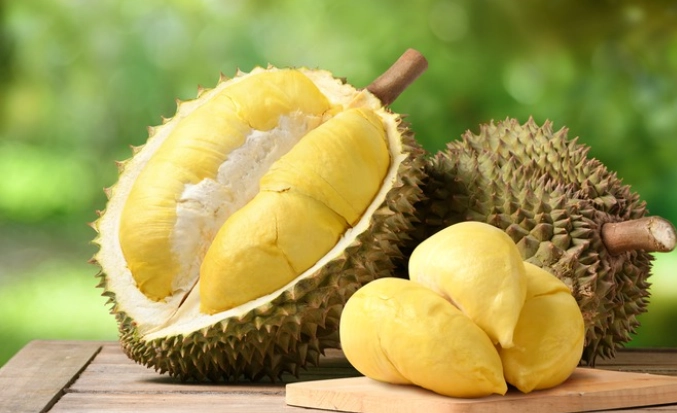
What is it about this tropical fruit that inspires such passion and revulsion? Is it just the smell, or is there more to the story? If you're curious, skeptical, or a seasoned fan looking for deeper knowledge, you're in the right place. We're going to peel back the thorny layers (figuratively and literally) of this unique fruit. We'll cover everything from its bizarre biology and complex flavor to the practical stuff – how to pick a good one, open it without a trip to the ER, and enjoy it without offending everyone in your apartment building.
What Exactly Is a Durian?
Botanically speaking, durian (scientifically Durio zibethinus) is a large, spiky fruit native to Southeast Asia. Think of a football (the American kind) covered in menacing, pyramid-shaped spikes. It grows on tall trees, and when it's ripe, it falls. That's why you'll see warning signs under durian trees – getting hit by one is no joke. Inside that formidable exterior are creamy, custard-like pods or arils that surround large seeds. That creamy flesh is what people fight over.
The fruit is deeply woven into the culture of countries like Thailand, Malaysia, Indonesia, and the Philippines. It's not just a snack; it's a seasonal event. Durian season brings with it dedicated festivals, late-night stalls, and endless debates about which variety is supreme.
And then there's the smell. Volatile sulfur compounds are the main culprits. These are the same family of chemicals found in onions, garlic, and, yes, rotten eggs. But in durian, they mix with sweet, fruity esters to create that legendary, love-it-or-hate-it fragrance. It's so potent that durian is famously banned from most hotels, airports, and public transport across Southeast Asia. They have signs with a durian crossed out, which is always a funny sight for first-time visitors.
The Great Durian Variety Show: It's Not All the Same
This is where most beginner guides fall short. They talk about "durian" as one thing. Big mistake. Saying you don't like durian after trying one type is like saying you don't like cheese after tasting a particularly strong blue. There are hundreds of cultivars, each with a distinct personality. The taste, texture, smell, and color can vary dramatically. Let's break down the most famous ones you're likely to encounter.
| Variety Name | Origin/Common In | Key Characteristics | My Personal Take |
|---|---|---|---|
| Musang King (Mao Shan Wang) | Malaysia | Rich, buttery, bittersweet. Bright yellow flesh. Thick, full cream texture. Small seed-to-flesh ratio. Often the most expensive. | The "celebrity" durian. Lives up to the hype for its complexity, but the price can be painful. The bittersweet aftertaste is iconic. |
| D24 (Sultan) | Malaysia | Classic durian flavor. Bitter-sweet balance, fibrous texture. Pale yellow flesh. Larger seeds. | The reliable workhorse. A great intro durian. Less overwhelming than Musang King, more traditional flavor profile. |
| Monthong | Thailand | Mild, sweet, and creamy. Very little bitterness. Pale yellow to cream-colored flesh. Large pods. | The "beginner's" durian. If the smell and bitterness scare you, start here. Sweet, almost dessert-like. Some purists find it too simple. |
| Black Thorn (Black Thorn) | Malaysia | Intense sweetness with a wine-like or alcoholic note. Orange-red flesh. Very small seeds. | A recent superstar. Incredibly sweet and fragrant. The unique winey note is divisive – I know people who swear it's the best, and others who find it strange. |
| Red Prawn (Ang Hay) | Malaysia | Distinct orange-red flesh. Sweet with a slight alcoholic fermentation taste. Sticky, creamy texture. | Fun and unique. The color alone makes it worth trying. The flavor is rich and complex, leaning heavily sweet. |
See what I mean? The world of durian is vast. A Monthong from Thailand tastes and smells completely different from a Musang King from Malaysia. The former is gentle and sweet; the latter is an intense, bittersweet punch to the senses. If you tried one and hated it, I'd bet money it was a particularly pungent, bitter variety. Maybe give a sweet Thai variety a shot before writing off all durian forever.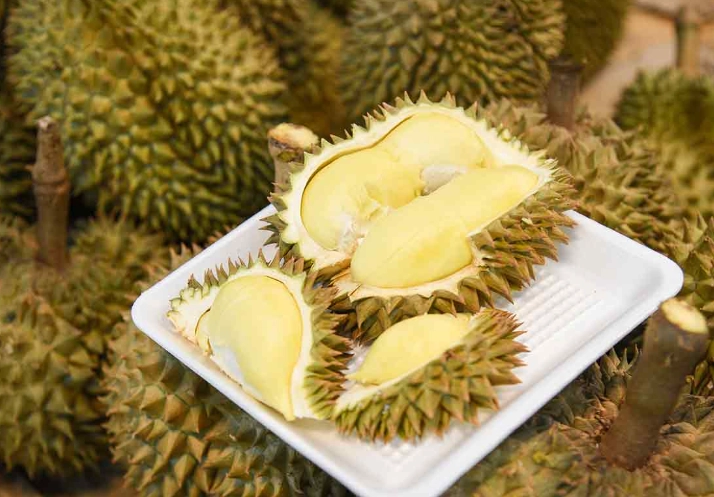
Beyond the Smell: The Real Flavor and Nutritional Punch
So, what does durian actually taste like? Descriptions are always a bit silly, but here goes. Imagine a rich, creamy custard. Now add layers of flavor: caramelized onions, sweet almonds, a hint of vanilla, and sometimes a backnote of bitterness like dark chocolate or coffee. The texture is key – it should be creamy and custardy, not watery or stringy. The best durian melts in your mouth.
Now, let's talk health. Durian isn't just empty calories. It's a nutritional powerhouse, which is why it's often lumped into the "superfood" category (though I find that term overused).
A Look at the Nutrients
Per 100 grams of fresh durian aril (that's just the edible flesh), you're getting a significant dose of good stuff. According to data from the USDA FoodData Central, it's rich in energy (it's calorie-dense, no doubt), dietary fiber, Vitamin C, potassium, and several B vitamins like thiamin and folate. The potassium content is particularly notable – it's higher than in a banana, gram for gram. It also contains tryptophan, an amino acid involved in serotonin production (the "feel-good" chemical). Maybe that's why eating it feels so satisfying?
The Health Benefits (And One Big Caveat)
The nutrients translate to potential benefits: improved digestion from the fiber, a boost to immunity from Vitamin C, and support for heart and muscle function from potassium. The Food and Agriculture Organization (FAO) of the UN has documented its traditional uses and nutritional value in regional food systems.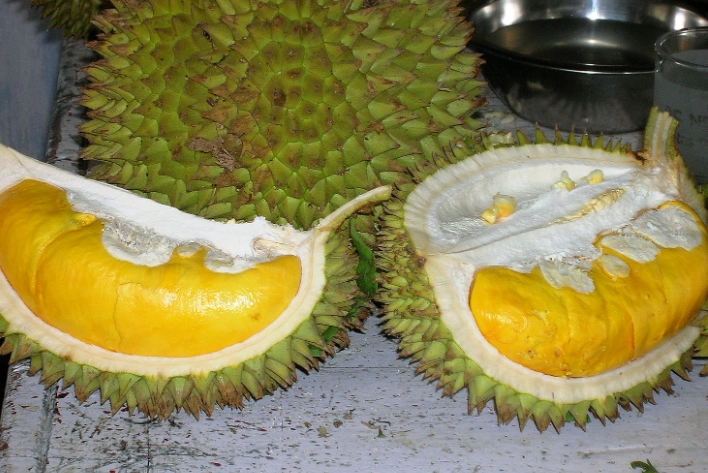
But here's the caveat, and it's a big one. Durian is also high in sugars and carbohydrates. It has a high glycemic index. Combine that with its richness, and it can be tough on your system if you overindulge. The old wives' tale in Asia is that it's "heaty" – eating too much can make you feel feverish, give you a sore throat, or cause digestive discomfort. From a modern perspective, it's likely the combination of high sugar, fat, and sulfur compounds. Moderation is absolutely key.
Your Practical Guide to Buying, Opening, and Eating Durian
Alright, let's get practical. You're at a market or a durian stall. What now? This section is for you.
How to Pick a Good Durian
Choosing a whole durian is an art form. Vendors are the real experts, but here are some signs to look for:
- The Stem: It should look freshly cut, not dry and shriveled. A thick stem can indicate the fruit had more time to draw nutrients from the tree.
- The Smell: A ripe durian will have a strong aroma emanating from the cracks where the segments split. No smell at all usually means it's unripe. A sour or alcoholic smell means it's over-fermented and gone bad.
- The Sound: Give it a gentle shake. If you hear a slight rattling or knocking sound, it can mean the flesh has pulled away from the shell slightly, which is a sign of ripeness. No sound might mean it's too fresh.
- The Spikes: The tips of the spikes on a ripe durian are often more flexible and can be pressed in slightly. On unripe fruit, they're rock hard.
Honestly? Your best bet is to find a reputable vendor and tell them your preference: sweet, bitter, creamy, etc. A good seller wants you to enjoy it so you come back.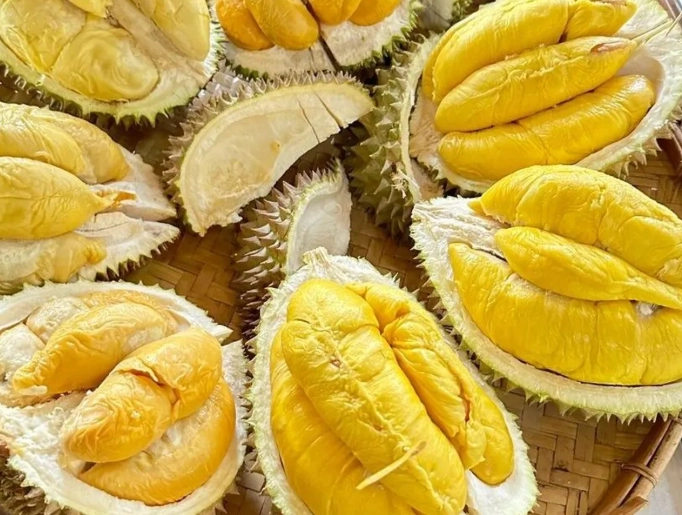
The Great Opening Challenge
Opening a durian is a ritual. Please, wear gloves. Those spikes are sharp and the shell is tough. I have the scars to prove it.
- Find the seams. Look for faint lines running from the stem to the base. This is where the fruit naturally splits.
- Insert a strong knife. Use a heavy, sturdy knife (like a cleaver) or a specialized durian knife. Wiggle it into one of the seams near the stem.
- Leverage and twist. Use the knife as a lever to pry the seam apart. You'll hear a cracking sound. Work your way around the seam.
- Pull apart with hands. Once you have a good crack, you can often use your (gloved!) hands to pull the two halves apart, revealing the creamy pods inside.
Most people just buy pre-opened pods from a stall. It's easier, less messy, and you can see exactly what you're getting. No shame in that.
How to Eat It (And Store It)
Use your fingers. Scoop the flesh out of the pod. You can eat around the large seed, or suck the cream off it (a true fan's move). Some people use a spoon, especially if it's very ripe and messy.
Pairings? In Southeast Asia, it's often eaten plain. But there are classic combos: with sticky rice, in ice cream, or as a modern twist in cakes, pastries, and even coffee. The saltiness of salted fish or the blandness of white rice is said to balance its "heaty" nature.
Storing it is the real headache. That smell permeates everything. If you have leftover durian flesh:
- Seal it in multiple airtight containers (I use two).
- Store it in the fridge immediately, and eat within 1-2 days.
- For longer storage, freeze it. Frozen durian is great for smoothies or baking. The texture changes, but the flavor remains.
Durian Dilemmas: Answering Your Burning Questions
We touched on this. It's a complex cocktail of volatile sulfur compounds (like ethanethiol and methanethiol) mixed with sweet esters. Scientists believe the smell evolved to attract large mammals like elephants and orangutans in the wild to eat the fruit and disperse the seeds. Humans just happened to join the party.
Yes, absolutely. The bans in hotels, metros (like Singapore's MRT), airports, and some taxis are very real and strictly enforced with heavy fines. It's not a joke. The smell is persistent and difficult to remove from upholstery and air conditioning systems.
In your checked luggage? Technically, if it's vacuum-sealed and in a sturdy, leak-proof container, you might get away with it. But it's a huge risk. If the seal breaks, you'll have a very expensive, smelly problem. Most airlines explicitly forbid it. In your carry-on? Forget it. It will be confiscated at security. Your best bet is to enjoy it at the source or buy processed products like durian candies or paste.
The "heaty" concept in Traditional Chinese Medicine aligns with the experience many have. From a nutritional standpoint, your body is working hard to metabolize the high density of sugars, fats, and sulfur compounds. It can raise your metabolic rate and body temperature slightly. It's also very rich, which can cause indigestion. The solution is simple: eat less. One or two pods is a serving, not a whole fruit.
Frozen whole durian pulp (often Thai Monthong) is a fantastic product. It retains flavor well and is perfect for making desserts, smoothies, or just thawing and eating if you can't get it fresh. Pasteurized durian paste has a more concentrated, sometimes slightly caramelized flavor and is used primarily in baking and confectionery. It's different, but still delicious in its own right.
The Final Verdict on the King
Durian is an experience. It's food as adventure. It challenges your senses, defies easy description, and creates stronger opinions than most politicians.
Should you try it? If you have the opportunity, absolutely. Go in with an open mind. Start with a milder, sweeter variety like Monthong. Don't judge it by the smell alone – the taste is a different world. Eat it fresh, in season, from a trusted source. And share it with friends. The social aspect is half the fun.
Will you love it? Maybe. Maybe not. But you won't forget it. And that, in my book, makes it one of the most fascinating foods on the planet. It's more than a fruit; it's a story, a memory, a conversation starter. It's the King of Fruits, spikes, smell, and all.
Just maybe don't eat it in your hotel room.
Reader Comments