Let's be honest, most people land in Verona because of a 16th-century play. They come for Juliet's balcony, snap a photo, and think they've seen it. They miss the real city. I've spent years getting lost in its cobbled alleys, and I can tell you Verona is a layered masterpiece. It's a Roman city with an arena that still hosts roaring crowds. It's a medieval fortress town perched above a winding river. It's a Renaissance gem with frescoed palaces and a culinary tradition that'll ruin other Italian food for you. This guide is for the traveler who wants to move past the postcard and into the heart of one of Italy's most livable, and surprisingly complex, cities.
Your Verona Travel Blueprint
The Non-Negotiable Sights in Verona
You can't see everything, so prioritize. Here's what's actually worth your time, from the iconic to the underrated.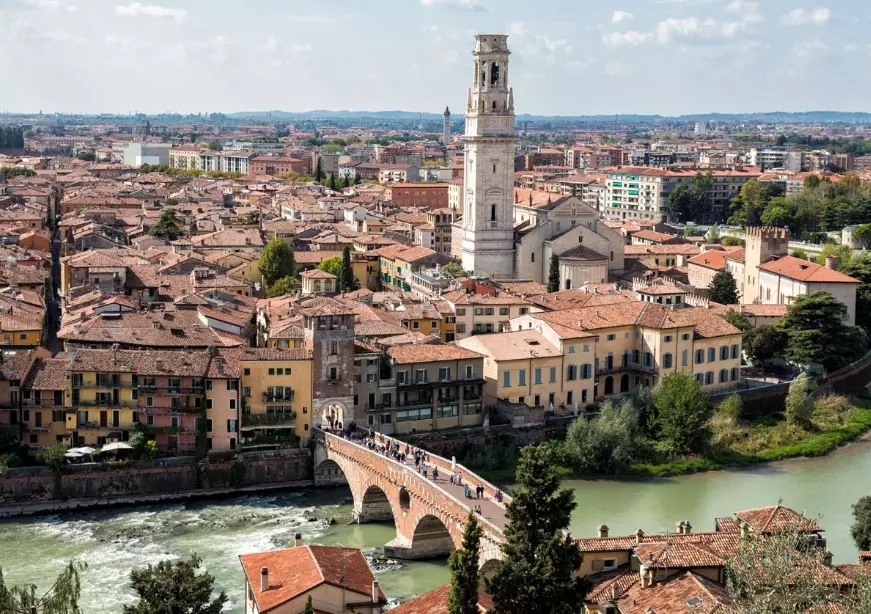
The Arena di Verona: A Roman Colosseum That's Still Alive
Address: Piazza Brà, 1, 37121 Verona VR. Open: 8:30 AM to 7:30 PM (Tue-Sun), 1:30 PM to 7:30 PM (Mon). Hours shorten in winter. Ticket: €10 full price. You can buy online from the official Arena di Verona website to skip the line.
It's not just a ruin. Walking inside the 1st-century Arena is staggering—the scale, the preservation. But the real magic happens in summer. From June to August, it transforms into the world's largest open-air opera house. Seeing Aida here, with thousands holding candles, is an experience that beats any museum. A common mistake? Just walking the perimeter. Pay the entrance fee and get inside the bowl. The view from the top tiers back over Piazza Brà is worth the climb.
Castelvecchio & Ponte Scaligero: Fortress Power
Address: Corso Castelvecchio, 2. Open: 8:30 AM to 7:30 PM (Mon 1:30 PM start). Ticket: €6 for the museum.
This 14th-century castle, built by the ruling Scaliger family, is a lesson in medieval military architecture. The museum inside has a superb collection of Venetian Renaissance art, but honestly, you come for the building itself. Walk its dramatic ramparts and cross the iconic Ponte Scaligero, the fortified bridge over the Adige River. It's the best spot in town for sunset photos. The red brick against the blue sky and river is pure medieval drama.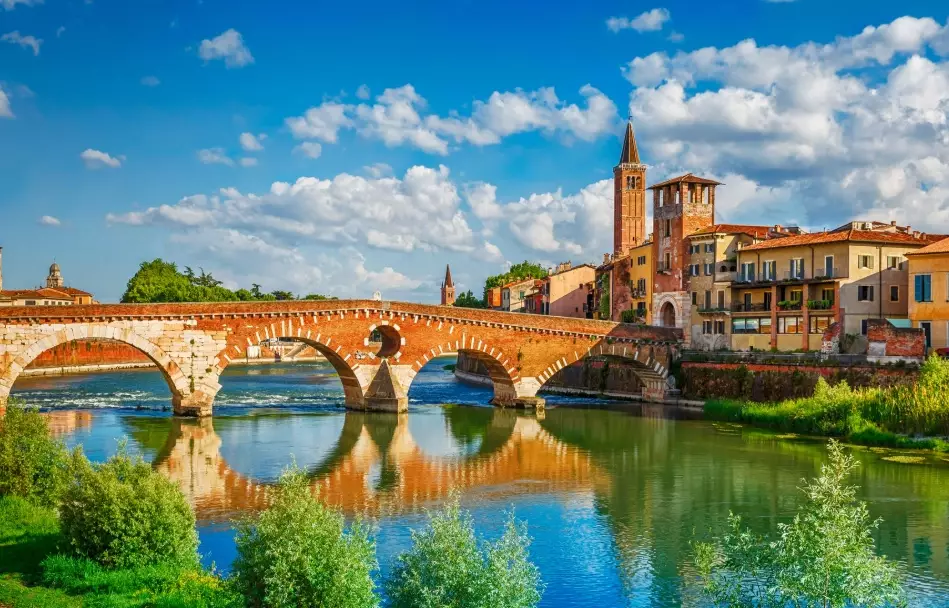
Piazza delle Erbe & Piazza dei Signori: The Twin Hearts
These two adjacent squares are the living room of Verona. Piazza delle Erbe is the bustling market square, built on the ancient Roman forum. By day, it's stalls selling souvenirs and fruit. By night, it's all aperitivo chatter. Look for the frescoed Mazzanti Houses and the Torre dei Lamberti (you can climb it for a 360° view).
Walk under the Arco della Costa (with a hanging whale rib) and you're in Piazza dei Signori. Quieter, more dignified, surrounded by elegant loggias and the statue of Dante. This is where you feel the city's governance and intellect. Grab a coffee at the historic Caffè Dante here and just watch.
A Local's Guide to Verona's Food & Wine
Forget generic pizza. Verona is in the Veneto region, and its cuisine is hearty, influenced by the mountains and the Po Valley.
| Dish | What It Is | Where to Try It |
|---|---|---|
| Pastissada de Caval | Braised horse meat stew, slow-cooked with red wine and spices. A historic, rich dish. Sounds wild, tastes like the most tender beef stew you've ever had. | Trattoria al Pompiere (Vicolo Regina d'Ungheria, 5). A classic, bustling spot. Expect to pay €18-22 for a main. |
| Bigoli con l'Anatra | Thick, whole-wheat spaghetti with a rich duck ragù. Comfort food at its finest. | Osteria da Ugo (Via degli Alpini, 9). A no-frills local favorite. A plate is around €12. |
| Risotto all'Amarone | Creamy risotto cooked with the powerful, dry Amarone wine. Intense and luxurious. | Ristorante Maffei (Piazza delle Erbe, 38). Fine dining on the square. €20+ for a primo. |
| Pandoro | The golden, star-shaped Christmas cake that originated here. Eat it plain or with mascarpone cream. | Any pasticceria in December, especially Pasticceria Flego. |
The Wine: You're in the heart of Valpolicella country. Order a glass of Amarone della Valpolicella (full-bodied, dry, complex) or its lighter, cherry-fresh cousin, Valpolicella Classico. For a unique local white, try Soave from just east of the city.
How to Spend 2 Perfect Days in Verona
Day 1: Ancient & Medieval Core
Morning (9 AM - 1 PM): Start at Piazza Brà. Go inside the Arena (book ahead). Then, stroll down the elegant Via Mazzini shopping street towards the center. Dive into Piazza delle Erbe, soak up the market atmosphere, and climb the Torre dei Lamberti for orientation.
Afternoon (2 PM - 7 PM): Have lunch at a trattoria off the main square (like Osteria da Ugo). Visit Juliet's Courtyard (brace yourself). Then, walk to Castelvecchio. Explore the castle museum and walk across the bridge. End the day with an aperitivo on a terrace overlooking the Adige River.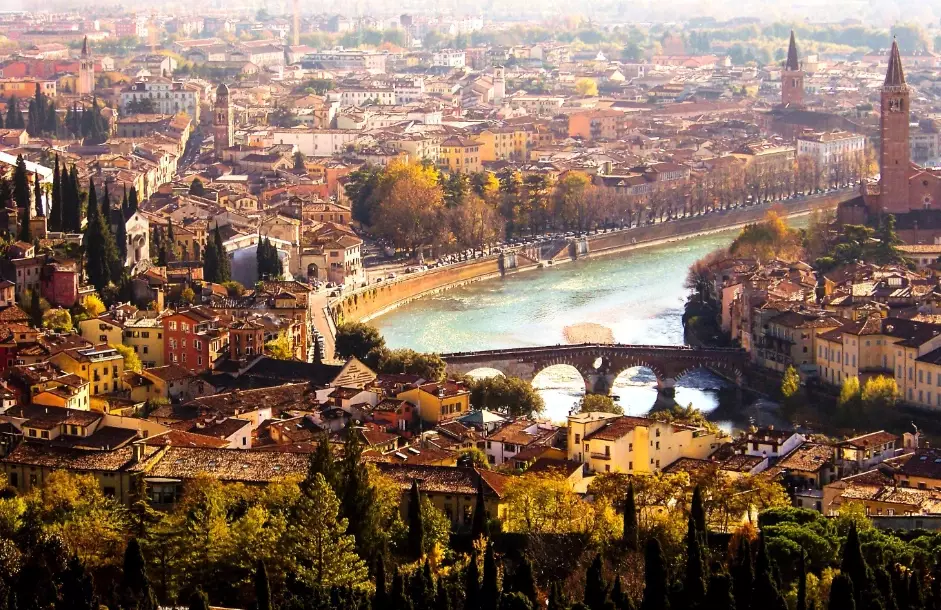
Day 2: Gardens, Views & Opera
Morning (10 AM - 1 PM): Take a leisurely walk across the Ponte Pietra (Roman bridge) to the other side of the river. Climb up to the Teatro Romano (Roman theatre) and the Castel San Pietro viewpoint. This is the classic postcard view of Verona's rooftops and river bends. It's a steep climb, but there's also a funicular.
Afternoon (2 PM onward): Explore the peaceful Giardino Giusti (Giusti Garden), a stunning Renaissance garden with manicured hedges and grottoes (€10 entry). Later, if it's opera season, have an early dinner and head to the Arena for the performance. If not, consider a short train trip (25 mins) to Lake Garda (town of Peschiera or Sirmione).
Getting Around & Practical Advice
Arrival: Verona's airport (VRN) is small and well-connected. The Aerobus shuttle takes 15 minutes to the train station (Porta Nuova). Trains from Milan, Venice, and Bologna are frequent and fast.
In the City: The historic center is compact and entirely walkable. Wear comfortable shoes—the cobblestones are unforgiving. Buses are useful only for reaching accommodations outside the center. Consider the Verona Card if you plan to enter 3-4 major monuments. It covers Arena, Castelvecchio, Lamberti Tower, and more, plus bus travel. Calculate if it's worth it for your itinerary.
Timing Your Visit: Avoid July and August if you hate crowds and heat. The opera festival is on, but the city swelters. Late spring (May, June) and early autumn (September, October) are ideal. Winter is cold but magical around Christmas markets.