Quick Navigation
- Digging into the Heart of Pachamanca: More Than a Meal
- How to Make Pachamanca: A Step-by-Step Breakdown of the Ritual
- Where and How to Experience an Authentic Pachamanca
- Can You Make a Pachamanca at Home? A Realistic Guide.
- Pachamanca in the Modern World: Festivals and Recognition
- Your Pachamanca Questions, Answered
Let's be honest. When you first hear "pachamanca," it probably sounds like just another exotic dish from some far-off place. Maybe you picture a fancy plated meal in a restaurant. I thought the same thing before I saw it for real. Then I stood in a field in the Sacred Valley, watching smoke curl from a pile of earth, and realized I had it all wrong. This wasn't cooking. This was a ritual.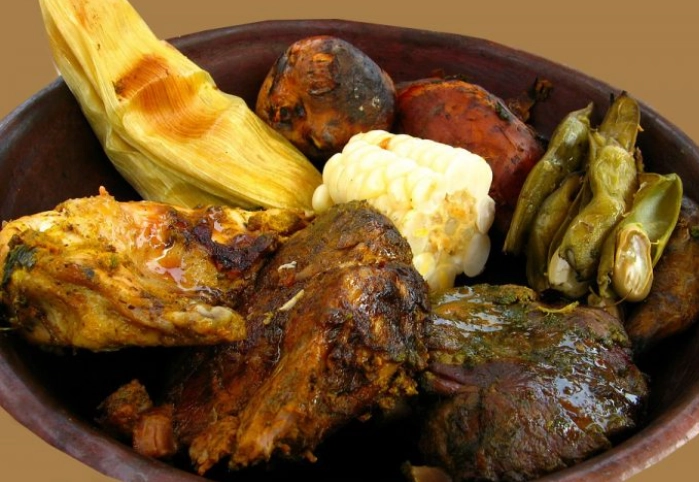
Pachamanca is Peru's ancient answer to the barbecue, but that comparison feels almost insulting. It's a pre-Columbian cooking method where marinated meats, tubers, and beans are slow-cooked using superheated stones in a pit dug right into the ground. The name itself tells you everything: "Pacha" means earth or world, and "Manca" means pot. The earth is the pot.
The first time I tried it, the host, a local farmer named Julio, wouldn't let anyone touch the food until he had poured a little chicha (corn beer) onto the ground as an offering. "Para la Pachamama," he said with a seriousness that shut us all up. That moment stuck with me. You're not just eating lunch; you're participating in something ancient and deeply respectful. It’s humbling.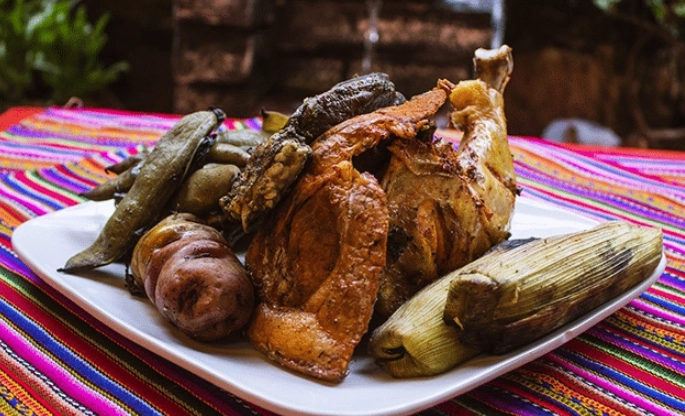
Digging into the Heart of Pachamanca: More Than a Meal
To understand pachamanca, you have to look past the ingredients. Sure, the food is fantastic, but the magic is in the process and the purpose. This is food as a social contract, a way to give thanks, and a brilliant piece of culinary engineering that harnesses geothermal energy.
Historically, it was the food of festivals and major communal work projects, like building a house or harvesting a field. A successful pachamanca meant a successful community effort. The Andean civilizations that developed it, long before the Inca Empire rose to power, mastered this technique out of necessity and reverence. They understood their environment in a way we often forget today.
I've read academic papers that try to dissect its socio-economic role, but honestly, being there is better than any paper. The laughter, the anticipation as the pit is uncovered, the shared labor of preparing the stones—it’s a team-building exercise that actually works. Nobody is on their phone.
How to Make Pachamanca: A Step-by-Step Breakdown of the Ritual
Okay, let's get practical. How does this actually work? If you're thinking of trying a backyard version (more on that later), you need to know the real process. It's methodical and requires patience. Rushing a pachamanca is like rushing a sacrament—it misses the point.
The preparation starts hours, sometimes a day, before the cooking begins. It's a whole production.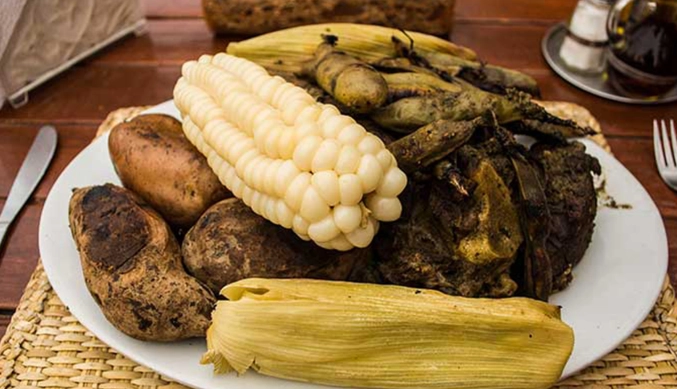
The Sacred Ingredients: What Goes Into the Earth Pot
The beauty of a pachamanca is its flexibility based on region and season, but there's a core cast of characters. It's a symphony of textures and flavors that cook together, their juices mingling in the steam.
| Ingredient Category | Typical Examples | Role & Flavor Contribution |
|---|---|---|
| Meats | Marinated pork, lamb, chicken, guinea pig (cuy), alpaca | Provides savory, umami-rich foundation and fats. The marination (with vinegar, spices, chincho herb) is key. |
| Tubers & Roots | Potatoes (many native varieties like papa amarilla), sweet potatoes (camote), olluco, mashua | The hearty base. They absorb the smoky herb and meat flavors, becoming unbelievably creamy. |
| Legumes & Vegetables | Fava beans (habas), corn on the cob (choclo), green beans | Adds sweetness (corn) and earthy notes (beans). The fava beans steamed in their pods are a personal favorite. |
| Flavor Agents | Huacatay (black mint), chincho, cumin, garlic, aji panca paste, salt | The soul of the dish. Huacatay's unique aromatic flavor is non-negotiable for an authentic taste. |
Finding real huacatay outside Peru can be a challenge. I've tried substitutes, and they're never quite right. It has this sharp, almost medicinal minty-ness that cuts through the fat. If you can get it as a paste or frozen, do it.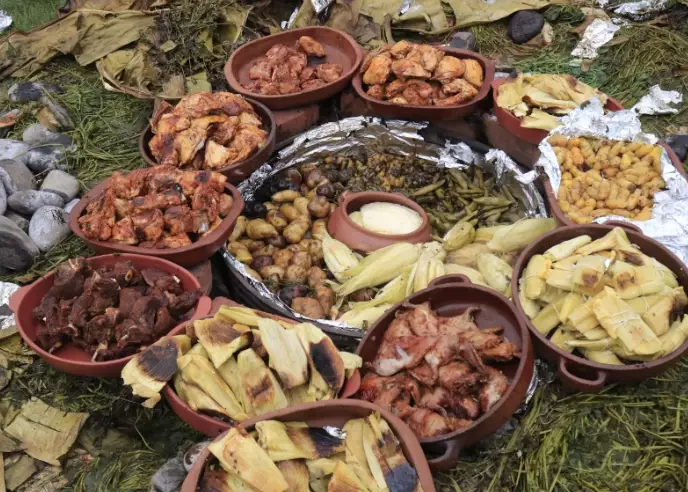
The Process: From Pit to Plate
Here’s where the real action happens. Watching experts do this is like watching a well-choreographed dance. Everyone has a job.
- Digging the Pit (Huatia): A rectangular pit, about 2-3 feet deep, is dug in clean soil. The size depends on the crowd. This isn't casual—the dimensions matter for heat distribution.
- The Fire & Stones: A large fire is built in the pit using native wood (like eucalyptus or queñua). Dozens of fist-sized volcanic stones are placed in the fire. This is the fuel. They need to get white-hot, which can take over an hour. The type of stone matters; porous volcanic stones hold heat better and don't explode.
- Layering the "Pot": Once the stones are ready, the fire's embers are partially cleared. The hot stones are spread evenly. This is the critical moment. A layer of aromatic herbs—huacatay, chincho—is thrown directly onto the sizzling stones. The whoosh of scent is incredible. Then, the food is carefully arranged in layers: tubers at the bottom (they take longest), then meats, then beans and corn. More herbs go between layers.
- Sealing the Earth Oven: The whole pile is covered with more large leaves (like banana or maize leaves), then damp cloths or burlap sacks. Finally, the excavated earth is shoveled back on top, sealing everything in completely. No steam escapes. It becomes a self-contained, pressurized, geothermal oven.
- The Waiting Game: This is the hard part. It cooks for 1.5 to 3 hours depending on size. You wait, you talk, you drink chicha. The anticipation builds. You can sometimes see a faint wisp of steam from the seal if it's not perfect.
- The Unveiling (Apertura): The most dramatic moment. The earth is carefully scraped away, the covers removed, and the cloud of aromatic steam billows out. The food is retrieved, often with a cheer. It's served immediately on large platters for everyone to share.
Can it go wrong? Sure. If the stones aren't hot enough, the food stews instead of steaming quickly. If the seal isn't tight, heat escapes. I've been to one where the timing was off and the potatoes were still hard in the center. A bit of a letdown, but even then, the experience was worth it.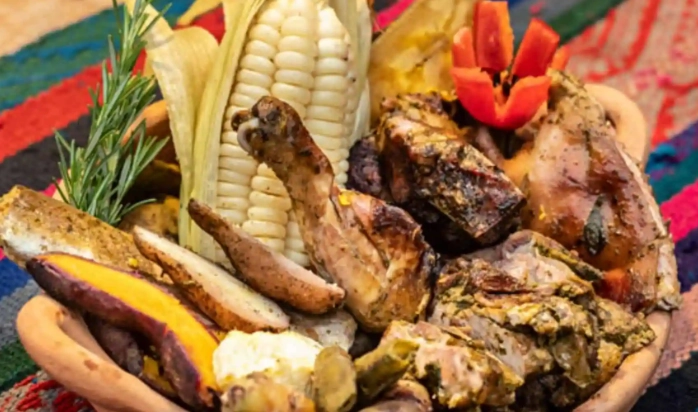
Where and How to Experience an Authentic Pachamanca
You're probably thinking, "This sounds amazing, but I can't just dig a pit in my backyard." True. So where can you actually experience a real pachamanca?
The best place is, unsurprisingly, in the Peruvian Andes. The Sacred Valley near Cusco is pachamanca heartland. Many rural communities and even some agritourism lodges offer it as part of a cultural experience. Don't look for it on the menu of a standard Lima restaurant—it's a weekend, celebratory dish. Look for places that require a reservation in advance because they need to prepare the pit.
Some of the best pachamanca I've had wasn't at a tourist spot at all, but at a family farm outside of Huancayo, invited by a friend of a friend. That's the gold standard. But for travelers, reputable tour operators that work with communities are a great bet. The Peruvian Tourism Board's official site can sometimes list festivals where pachamanca is featured.
For the truly adventurous, some cooking schools in Cusco offer one-day workshops where you participate in the entire process, from marinating to digging. It's hard work, but you earn that meal.
Can You Make a Pachamanca at Home? A Realistic Guide.
Let's be real. Most of us don't have a yard where we can dig a three-foot pit. And our neighbors might call the cops if we start a large open fire. So is a home version possible?
Yes, but with compromises. Think of it as the "spirit of pachamanca" rather than a perfect replica. The goal is to capture the layered, aromatic, steam-infused cooking method.
Here’s a practical, scaled-down approach using a large, heavy-duty roasting pan or Dutch oven (the biggest you have) and your home oven:
- The "Stones": Preheat your oven as high as it will go (500°F/260°C). Place a layer of clean, dry river rocks or even large, oven-safe ceramic baking stones on the bottom rack to preheat for an hour. (Safety first: make sure the stones are dry and not prone to splitting.)
- The Layering: Carefully remove the hot stones with tongs and place them in the bottom of your heavy pan. Immediately throw a handful of fresh huacatay or a mix of mint and cilantro on them. Quickly layer your pre-marinated meats and vegetables on top. Add more herbs.
- The "Seal": Cover the pan very tightly with a double layer of heavy-duty foil, then the lid. This traps the steam.
- The Bake: Put the sealed pan back in the hot oven, then immediately reduce the temperature to about 350°F (175°C). Let it cook for 2-3 hours. Don't peek!
It works. The flavor is surprisingly close, especially if you use the right herbs. You get the tenderizing steam and some of that aromatic infusion. What you miss is the subtle, earthy minerality from the actual ground, but it's a worthy tribute. I've done this for a small dinner party, and it was a huge hit. Just manage expectations—call it a "home-style pachamanca."
Pachamanca in the Modern World: Festivals and Recognition
This tradition isn't stuck in the past. It's alive and evolving. Major pachamanca festivals are held across Peru, like the "Pachamanca Raymi" in the Mantaro Valley, where they cook monumental versions for thousands of people. It's a point of immense local pride.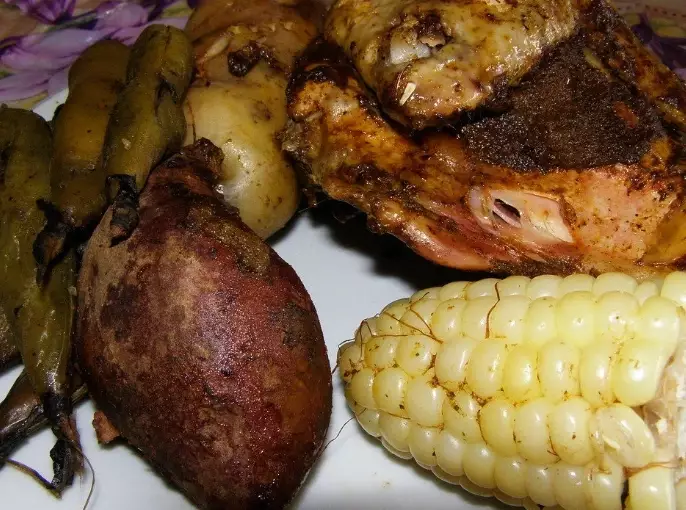
There's also a growing movement to highlight pachamanca as a symbol of sustainable, low-tech, and community-focused cooking. In an age of fast food and energy-intensive appliances, it’s a powerful reminder of a different way to relate to our food. The UNESCO Intangible Cultural Heritage lists many food traditions, and while pachamanca itself isn't listed yet (though it's on Peru's tentative list), the principles it embodies—community, sustainability, traditional knowledge—are exactly what such programs seek to protect.
I've even seen high-end restaurants in Lima deconstruct it—serving the elements of pachamanca beautifully plated, with a smoky sauce to represent the pit. It's interesting, but to me, it feels like reading a summary of a great novel. You get the plot, but you miss the soul.
Your Pachamanca Questions, Answered
Let's tackle some of the practical things people really want to know.
So, there you have it. Pachamanca is more than a recipe; it's a window into a worldview where food, community, and the earth are inseparable. It’s slow food in the truest sense. You can't rush the stones heating. You can't rush the earth doing its work. You just have to wait, together.
Maybe that’s the real secret. In a world obsessed with speed and convenience, pachamanca forces you to slow down. To dig. To wait. To share. And when you finally taste it, you understand why it’s lasted for thousands of years. It’s not just nourishment for the body; it’s food for the soul.