Quick Guide
So you're planning a trip to Bangkok and everyone's telling you, "You have to see a floating market!" Sounds amazing, right? Pictures of wooden boats piled high with tropical fruit, vendors in conical hats, canals buzzing with life. It's one of those iconic Thailand images. But then you start looking into it, and suddenly you're confused. Which one? There's more than one? Is it all just for tourists now? Is it even worth the hassle?
Let me tell you, I've been there. Literally. I've stood on those crowded piers at dawn, haggled for mangoes from a canoe, gotten stuck in a boat traffic jam, and also found those quiet, magical moments that make the trip unforgettable. The reality of visiting a Bangkok floating market is a mix of postcard-perfect scenes and very real logistical challenges. It's not a seamless, pristine cultural exhibit. It's a living, breathing, sometimes chaotic piece of Thai history and commerce that you get to step into.
This guide is here to cut through the noise.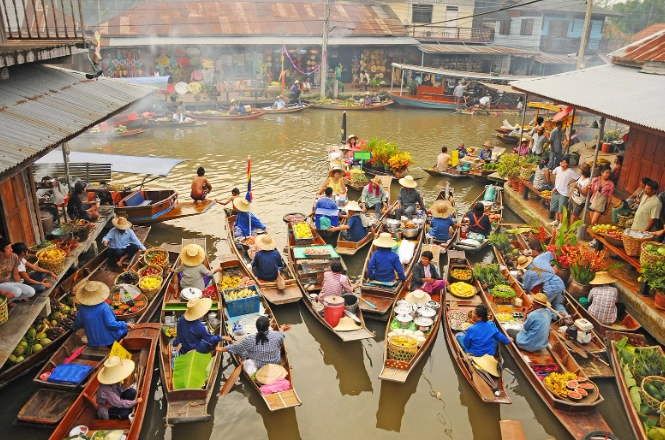
I'm not going to just list the markets. I'm going to tell you what it's actually like, who each market is really for, the honest downsides, and how to have a great experience regardless. Because choosing the right Bangkok floating market can mean the difference between a frustrating tourist trap day and one of the highlights of your entire Thailand trip.
Why Do Floating Markets Even Exist? A Quick Dip into History
Before we jump to the "which one" and "how to," it helps to know the "why." This isn't a theme park attraction someone dreamed up. For centuries, long before Bangkok's maze of roads and skyscrapers, the region was known as the "Venice of the East" for a reason. An immense network of canals, or khlongs, was the lifeblood of communities. These waterways were the highways, the shopping streets, and the meeting places.
The floating market was the natural supermarket. Farmers from the orchards would paddle their boats loaded with produce to central points where people from the city would come to buy. It was practical, efficient, and vibrant. The most famous historical market was probably the one in the Thonburi area, which was a major trading hub. You can see old maps and read accounts on the website of the Tourism Authority of Thailand, which has some great historical context. It paints a picture of a bustling aquatic economy.
Then came roads. As Bangkok modernized in the 20th century, many canals were filled in to make space for asphalt. The need for floating markets dwindled. Some disappeared entirely. Others, sensing a new opportunity, pivoted. They evolved from essential local markets to cultural attractions, preserving a way of life that was quickly vanishing. That's the delicate balance you see today: a real piece of heritage that also caters to visitors who want to witness it.
Visiting a floating market now is like visiting a historical reenactment that's still partly functional. The vendors are real, the food is real, but the audience has globalized.
The Big Three: Which Bangkok Floating Market is Right for YOU?
This is the core of the decision. Most guides will list five or six, but let's be real, for a first-time visitor with limited time, three names dominate the conversation. They represent three very different experiences. Picking the wrong one for your travel style is the biggest mistake you can make.
Here’s a blunt, no-frills comparison to help you decide at a glance.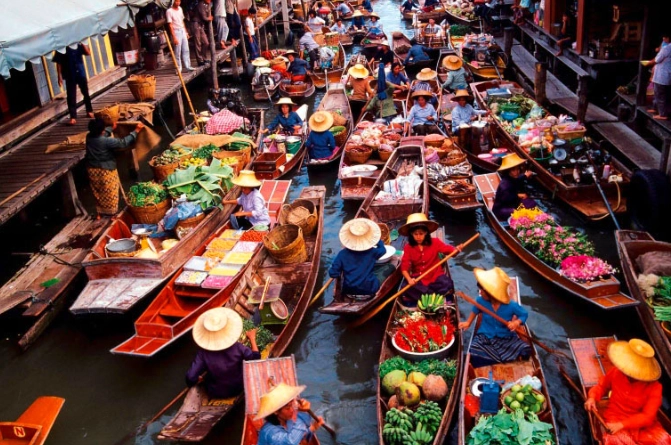
| Market | The Vibe | Best For... | Biggest Drawback | My Honest Take |
|---|---|---|---|---|
| Damnoen Saduak | The blockbuster. Hyper, crowded, photogenic, commercial. This is the one from all the posters. | First-timers who want "THE" iconic photo, don't mind crowds, and are okay with a heavily curated experience. It's a spectacle. | Can feel like a floating tourist trap. Prices are inflated, it's packed, and authentic interaction is minimal. | It's the Disneyland version. Impressive in scale, but you're very aware you're in a tourist attraction. Go early or don't go at all. |
| Amphawa | The local favorite. Lively, authentic, evening-focused. Less about souvenir trinkets, more about amazing food and a local weekend vibe. | Foodies, travelers seeking a more genuine atmosphere, those who prefer evenings over dawn raids. It feels like a place people actually go to. | It's only fully operational on Friday, Saturday, and Sunday evenings. The daytime is much quieter. | My personal favorite. The energy at night, with lights reflecting on the water and the smell of grilled seafood, is magical. It feels real. |
| Taling Chan | The low-key escape. Small, relaxed, close to Bangkok. More of a floating food court than a sprawling market. | Travelers short on time, those who want a taste without a full-day commitment, or anyone overwhelmed by the idea of big crowds. | It's small. If you're expecting a vast network of canals, you'll be disappointed. It's a pleasant snack, not a full meal. | A great "introductory" or "low-effort" option. Perfect for a lazy Saturday morning. Manage your expectations—it's charming, not epic. |
See? It's not about "best," it's about "best for you." Want the iconic, must-see-even-if-it's-crazy experience? Damnoen Saduak is your answer. Want to feel like you've stumbled onto something deliciously local? Head to Amphawa on a weekend night. Just want to dip your toes in without the long drive? Taling Chan has your back.
A quick story: My first time at Damnoen Saduak, I made the classic mistake of arriving at 10 AM. The canal was a logjam of long-tail boats, each one crammed with tourists like me. Vendors' shouts were a constant din. It was overwhelming. I paid 150 baht for a small coconut. I felt like a cog in a machine. But then, our boat driver ducked into a tiny side canal, just for a moment. The noise vanished. We saw an old woman washing clothes by her porch, kids waving from a stilt house. That 60-second detour reminded me there was a real community here, living around the edges of the circus. It changed my perspective.
Damnoen Saduak Floating Market: Navigating the Icon
If you choose this path, you need a strategy. This market in Ratchaburi province (about 1.5-2 hours southwest of Bangkok) is the most famous floating market in Thailand, period. The main section is a wide canal lined with vendors on boats and on the banks, and you explore it by hiring a paddleboat (they seat 4-6 people usually).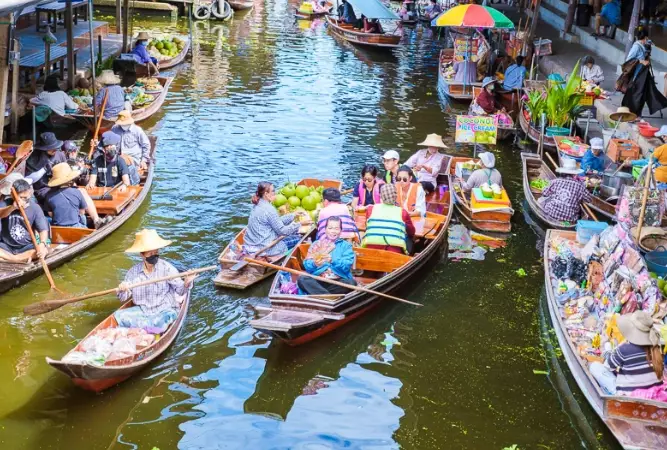
How to not hate it:
- GO EARLY. I cannot stress this enough. Be on the water by 7:00 AM, 7:30 at the absolute latest. The tour buses start rolling in around 8:30-9:00, and by 10:00, it's a different, much less pleasant place. The early light is beautiful, the air is cooler, and you might actually have a moment of peace.
- Negotiate the boat price firmly but politely before you get in. Agree on the duration and route. The standard is usually a 1-hour loop. Don't let them rush you.
- Be prepared for vendors to paddle right up to your boat. A simple smile and "no, thank you" ("mai ao, khop khun ka/krap") is all you need. They're used to it.
- Walk the land-based sections too! Some of the best food stalls (and slightly better prices) are on the walkways alongside the canal.
Watch out for this scam: Some drivers or touts at the bus drop-off point will tell you the market is "closed" or "far away" and that you need a special (expensive) taxi or boat to get to the "real" market. It's nonsense. Just walk towards the water. The main entrance is obvious.
Amphawa Floating Market: The Weekend Night Magic
Amphawa, in Samut Songkhram province (about 1.5 hours west), is a different beast. It's a working community where the market erupts along the canal banks and on boats every weekend evening. Yes, there are tourists, but you'll also see huge numbers of Thai families and friend groups out for dinner.
The food is the star here. You don't just buy a snack; you settle in at one of the crowded plastic tables on the bank, order a feast of grilled river prawns, mussels, noodles, and seafood, and soak in the atmosphere. The energy is electric in the best way.
What makes Amphawa special is that you can also book a firefly watching boat tour after dark. These take you into the mangrove canals where thousands of fireflies light up the trees like Christmas lights. It's a beautiful, serene contrast to the market's hustle. Check with reputable local tour operators or your accommodation for recommendations on eco-friendly firefly tours that don't disturb the insects with loud noises or bright lights.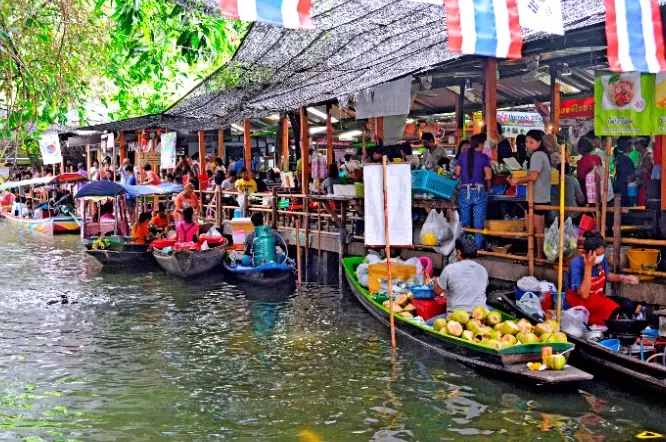
Taling Chan Floating Market: The Easy Breezy One
Only have a morning? Don't want to leave the city? Taling Chan is your spot. Located right on the outskirts of Bangkok (maybe a 30-45 minute taxi ride from downtown), it's a small, concentrated cluster of food boats around a pier. You sit at tables on a dock, and vendors in boats float up to serve you directly. It's incredibly convenient.
You won't get a long boat ride here (though short ones are available), and it's not a place for souvenir shopping. It's a place for eating fantastic, cheap, fresh Thai food in a unique setting. Think of it less as an "adventure to a floating market" and more as "an awesome, quirky lunch spot." It runs on weekends from around 8 AM to 5 PM.
Your Action Plan: How to Actually Do This (Without Stress)
Okay, you've picked your market. Now, how do you make it happen smoothly? Here's the nitty-gritty.
Getting There: Your Transport Options, Ranked
How you get there will define half your experience.
- Private Car/Van with Driver (Most Comfortable, Most Flexible): Book via a hotel concierge or a reputable app like Grab. You set the time, you leave when you want. Crucial for that early arrival at Damnoen Saduak. Splitting the cost 3-4 ways makes it very reasonable.
- Organized Tour (Most Brainless): A van picks you up, takes you, maybe includes a boat ride. It's easy. The downside? You're on their schedule, often arriving later with the crowds, and you might be herded to specific vendors where the tour gets a kickback.
- Public Minivan/Bus (Most Local, Most Challenging): From Bangkok's Southern Bus Terminal (Sai Tai Mai), you can find minivans to Damnoen Saduak or Amphawa. It's cheap. It's also confusing if you don't read Thai, you'll need a songthaew (pickup truck taxi) from the drop-off point to the market itself, and timing is less certain. Only for the confident, adventurous traveler.
Pro Tip for Damnoen Saduak: If you book a driver, ask them to take you to the "Ton Khem" pier. It's less crowded than the main pier and often has more reasonable boat prices.
What to Bring (The Non-Obvious Stuff)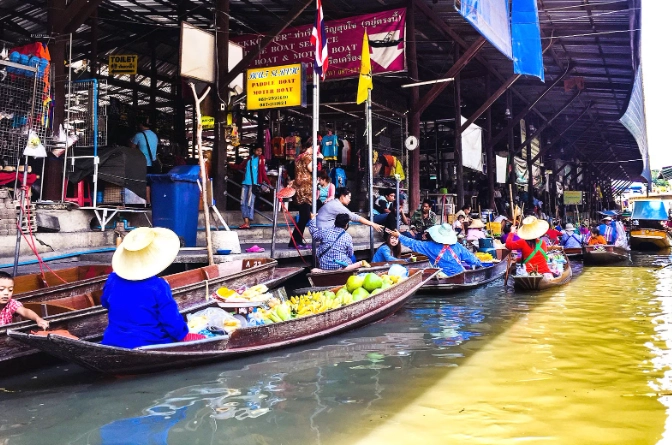
- Small Bills (Baht): 20s, 50s, 100s. Vendors on boats won't have change for your 1000-baht note. Get change at a land-based stall first.
- Hand Sanitizer & Tissues: You'll be eating with your hands. Bathrooms can be basic.
- A Hat & Sunglasses: The sun reflecting off the water is intense, even in the morning.
- A Waterproof Bag: For your phone/camera. Boat splashes are real, and sudden tropical downpours are always a possibility.
- Your Patience: Seriously. It might be crowded, hot, and chaotic. Go with the flow. Getting annoyed ruins it faster than anything.
What (and How) to Eat
This is a major highlight of any visit to a Bangkok floating market. Don't be shy.
Must-Try Dishes:
- Khanom Krok: Heavenly little coconut-rice pancakes, crispy on the outside, creamy inside. The classic.
- Pad Thai served in an omelet (Pad Thai Hor Kai): A boat specialty. They whip it up right next to you.
- Grilled Seafood: At Amphawa especially. Giant river prawns, squid, scallops—fresh off the grill.
- Fresh Tropical Fruit: Mangosteens, rambutans, ripe mangoes, pineapple. Often peeled and ready to eat.
- Iced Coffee/Roselle Juice: Lifesavers in the heat.
Point, smile, ask "Tao rai?" (How much?). If a price seems high, it probably is. It's okay to walk away. For cooked-to-order items on boats, just point to what you want on their display.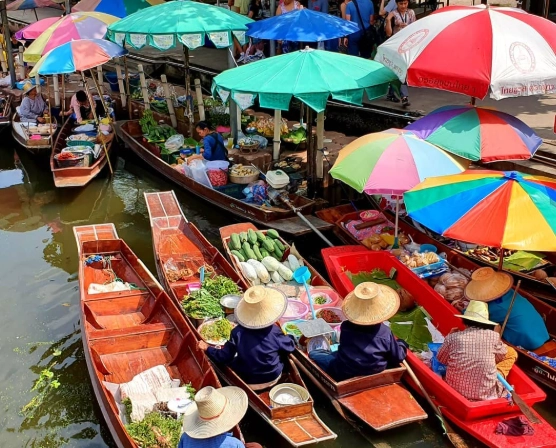
Common Questions (Stuff You're Actually Wondering)
Is it all just a tourist trap now?
Parts of it, yes, absolutely. Damnoen Saduak is a commercial enterprise built around tourism. But "tourist trap" implies it has no value, and that's not true. The skill of the vendors maneuvering heavy boats, the incredible food, the architecture of the houses along the canals—that's all real. It's a spectacle built on a genuine foundation. Amphawa feels much less like a trap.
What's the best day to go?
Weekends. Always weekends. That's when all markets are in full swing, with the maximum number of vendors. Amphawa is only Friday-Sunday evenings. Taling Chan is weekends. Damnoen Saduak operates daily, but is busiest (for better or worse) on weekends.
Should I book a boat ride in advance?
Almost never. You book boats at the pier when you arrive. The only exception might be a special private long-tail tour that includes multiple stops, which you'd arrange through a tour company.
Is it safe? What about hygiene?
Generally very safe regarding personal safety. Watch your wallet in big crowds, as anywhere. Hygiene? Stick to cooked foods or fruits you peel yourself. The iced drinks are usually fine—the ice is from commercial factories. If you have a very sensitive stomach, maybe skip the super-raw things. I've eaten extensively at these markets and never had an issue.
Can I visit a Bangkok floating market on a weekday?
Damnoen Saduak, yes, but it will be quieter (which can be nice). Many vendors may not open. Amphawa will be dead in the evening. Taling Chan will be closed. Weekday visits are a gamble for a muted experience.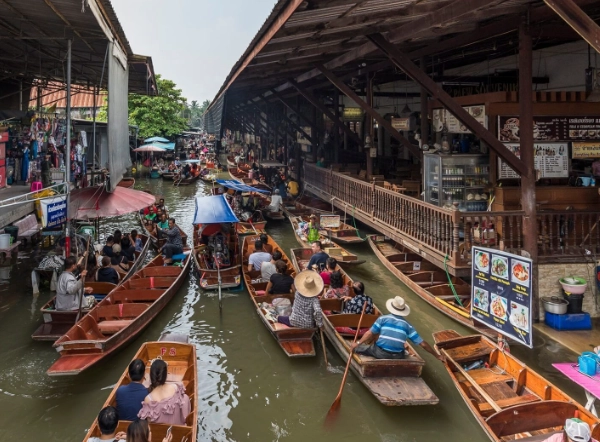
Beyond the Obvious: Making Your Visit Special
To really connect, try these things:
- Learn a few Thai phrases. "Hello" (Sawasdee), "Thank you" (Khop khun krap/ka), "How much?" (Tao rai?), "Delicious" (Aroy). The effort is always appreciated and can lead to smiles and better interactions.
- Put the camera down. For 10 minutes, just sit. Watch the ballet of the boats. Listen to the sounds—the putter of engines, the sizzle of grills, the chatter. That's the memory that will stick.
- Buy from the older, quieter vendor, not the one shouting the loudest. Your baht might mean more to them.
- Combine it with something else. The area around Damnoen Saduak has coconut sugar farms. Amphawa is near the famous Maeklong Railway Market (the "umbrella market" where a train goes through). Make a day of it.
So, there you have it.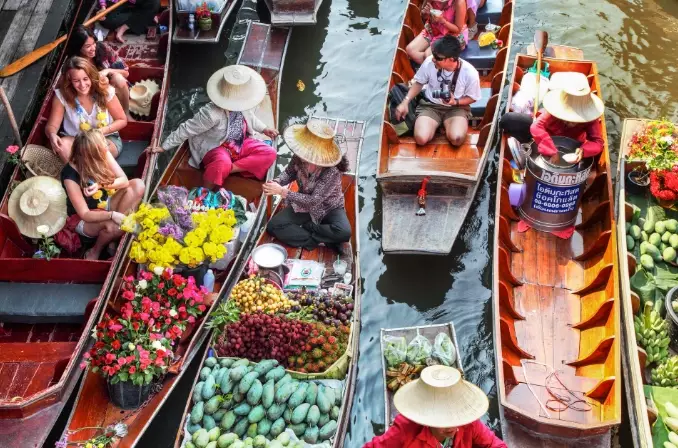
Visiting a Bangkok floating market isn't a passive activity. It's an immersion. It can be hot, crowded, and a bit overwhelming. But it can also be delicious, fascinating, and uniquely beautiful. It's a direct link to the Bangkok of 100 years ago, adapted for the world of today. Choose the market that matches your energy, go in with a plan and realistic expectations, embrace the chaos, and focus on the flavors and the feeling of being on the water. Do that, and you won't just get a photo. You'll get a story.
And honestly, that's what travel is really about, isn't it?
Reader Comments