Let's clear something up right away. If you're picturing rum cocktails in a carved mug and ribs drenched in sticky sweet sauce, you're thinking of Tiki bar fare, a mid-century American fantasy. Real Polynesian food is something else entirely. It's the scent of smoke from an underground oven, the creamy coolness of pounded taro, and the briny freshness of fish just pulled from the lagoon. It's food born from ocean voyages and island life, and it tells a story that's far more interesting than any paper umbrella.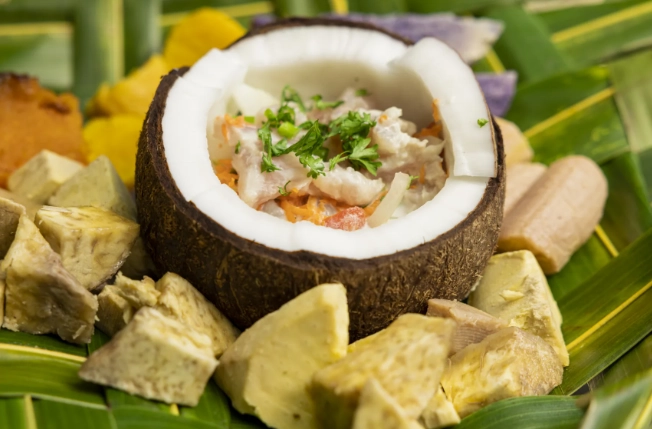
I've spent years eating my way across the Pacific, from the bustling food trucks of Honolulu to the family kitchens in rural Samoa. The biggest mistake newcomers make is treating "Polynesian" as one monolithic cuisine. It's not. It's a family of flavors, with distinct regional personalities shaped by each island's unique history and resources.
The Flavor Foundation: Staples of the Polynesian Kitchen
Before we get to specific dishes, you need to know the building blocks. These ingredients show up again and again, creating a recognizable culinary thread across thousands of miles of ocean.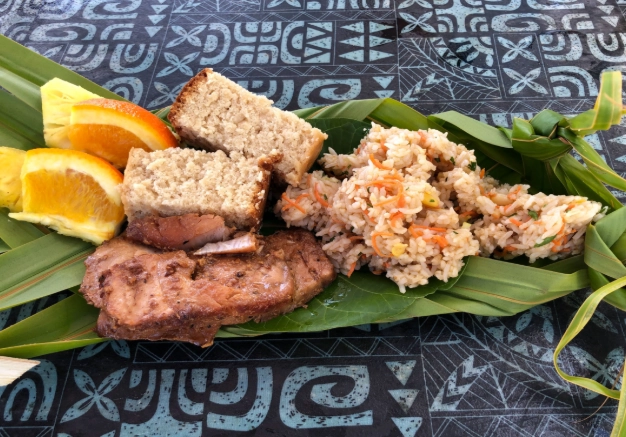
Taro (Kalo): This isn't just a side dish. Taro is a sacred staple. Its root is steamed and pounded into poi, a purple-gray paste that's a daily food in Hawaii. First-timers often find poi bland and gluey. It's an acquired taste, but its mild, slightly nutty flavor is meant to complement stronger, salted dishes. The leaves (luau leaves) are used like spinach for wrapping.
Coconut: Every part is used. The water is a drink, the milk creates lush curries and sauces, the cream thickens desserts, and the grated flesh is toasted for topping.
Seafood: This is obvious, but the preparation is key. Raw fish salads—poke in Hawaii, ika mata in the Cook Islands, poisson cru in Tahiti—are a cornerstone. The fish is always impeccably fresh, "cooked" in citrus or seasoned minimally to highlight its quality.
Pork: The centerpiece of every celebration. Traditionally cooked whole in an imu (an earth oven lined with hot stones), resulting in meat so tender it's called kalua pig.
Breadfruit ('Ulu): A starchy fruit that can be roasted, fried, or boiled. When fermented, it becomes a sour paste that's a key flavoring agent in some islands.
A Note on "Authenticity": Polynesian cuisine has never been static. The arrival of Europeans, then later Asian and American immigrants, brought new ingredients (onion, tomato, beef, soy sauce) that were eagerly adopted and folded into the existing food culture. Calling a dish like loco moco (rice, burger patty, egg, gravy) "inauthentic" misses the point. Modern Polynesian food is a living record of these encounters.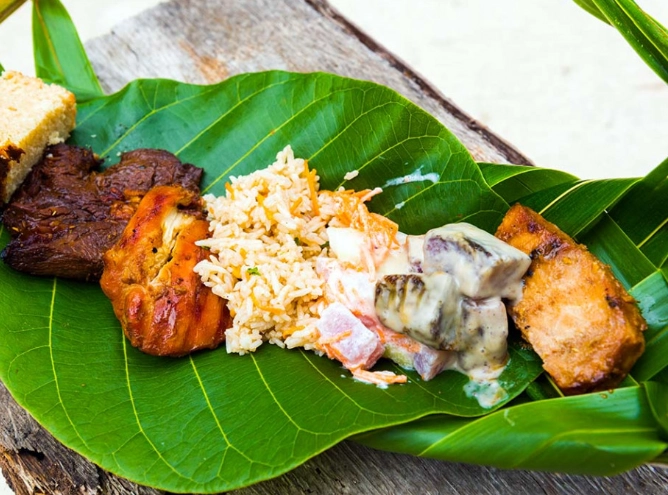
An Island-by-Island Taste Tour
Here’s where the flavors diverge. Think of this as a quick regional guide.
Hawaii: The Fusion Hub
Hawaii's food is a delicious chaos of influences. You have the native Hawaiian base (kalua pig, poi, laulau), layered with Japanese (sashimi, bento), Chinese (manapua—steamed buns), Portuguese (malasadas—donuts), and American (spam) flavors. This created unique plate lunch culture: two scoops rice, mac salad, and a protein like teriyaki beef or fried mahi-mahi. It's hearty, affordable, and everywhere.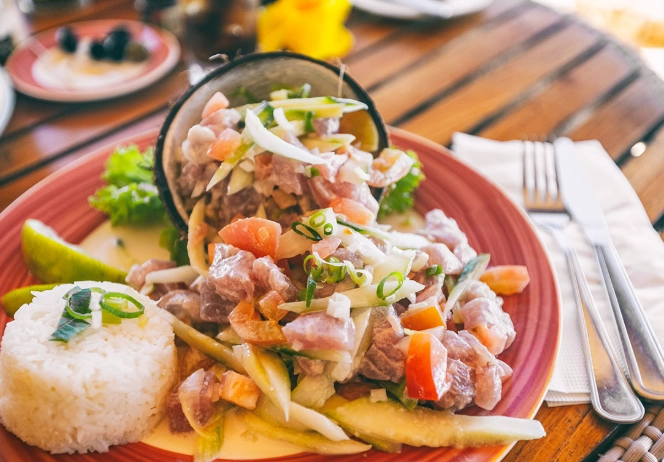
Spot to Try (Oahu): Helena's Hawaiian Food
1240 N School St, Honolulu, HI 96817
This is a no-frills, cash-only institution. You go for the classics. Order the "Hawaiian Food Combination" which gets you kalua pig, pipikaula (Hawaiian beef jerky), lomi lomi salmon, and poi. The pipikaula here is dry, salty, and addictive—a perfect counterpoint to the mild poi. It's not fancy, but it's a direct line to old-school flavors. Expect to spend $15-25 per person. Closed Sundays.
Tahiti & The Society Islands: French-Pacific Elegance
The French influence is unmistakable. You'll find baguettes sold alongside fish at the market. The iconic dish is poisson cru (literally "raw fish"): cubed raw tuna or jackfish marinated in lime juice and mixed with diced vegetables and coconut milk. It's lighter and more citrus-forward than Hawaiian poke. Also look for fafaru—a potent dish where fish is marinated in fermented seawater. It's an intense, acquired taste that many locals love but guides rarely mention to tourists.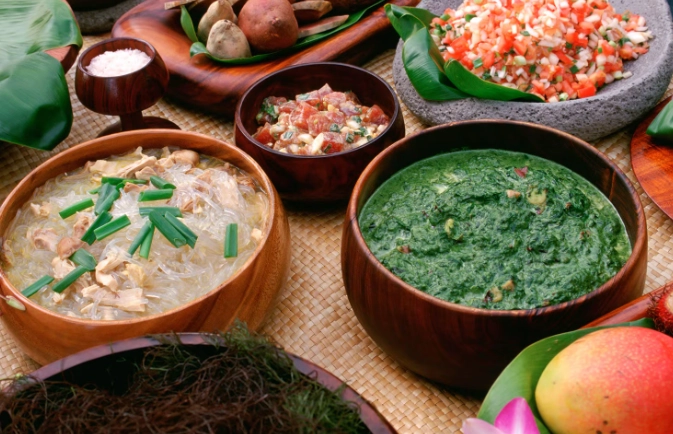
Samoa & Tonga: Earthy & Robust
Food here feels heartier. Palusami is a masterpiece: young taro leaves bundled around a core of coconut cream and onions, then baked until the package becomes a rich, creamy, savory parcel. Oka i'a is the Samoan version of raw fish salad, often using coconut cream as the dressing. A traditional umu (Samoan earth oven) feast is a must-experience, featuring whole fish, palusami, and breadfruit all cooked together on hot stones.
Aotearoa (New Zealand) Māori Cuisine: The Land-Based Tradition
With a cooler climate, Māori cuisine relies more on earth ovens (hāngī) for cooking root vegetables like kumara (sweet potato), pumpkin, and meats. The signature method gives food a distinctive, smoky-earth flavor. A modern revival is happening, with chefs using traditional ingredients like pikopiko (fern shoots), horopito (a peppery bush), and kawakawa (a medicinal leaf) in contemporary ways.
Decoding the Luau Experience: What to Really Expect
Yes, it's touristy. But a well-run luau is also a genuine celebration and your best chance to try a dozen dishes at once. Don't just go for the show; go for the food line. Here’s what to look for and prioritize on your plate:
The Imu Ceremony: Watch as they unearth the kalua pig. That smoky, shredded pork should be a highlight. If it's dry or bland, it's a bad sign.
Must-Try Buffet Items: Load up on kalua pig (with a bit of cabbage cooked underneath it). Try a small scoop of poi—use it as a palate cleanser between richer bites. Lomi lomi salmon (a salted salmon and tomato salad) is refreshing. Haupia (coconut pudding) is the classic dessert. Skip the generic macaroni salad and go for the poke if it looks fresh-made.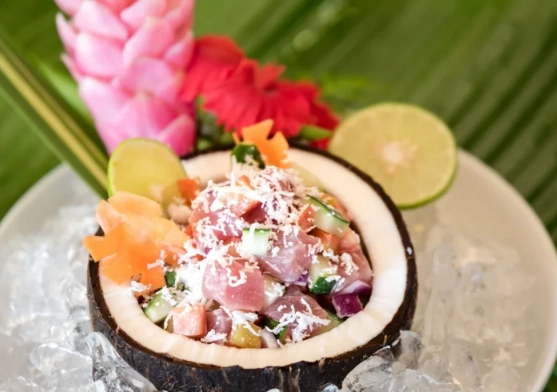
My advice? Book a smaller, family-run luau if you can find one. The food often feels more cared for than at the massive, 500-person productions.
How to Experience Authentic Polynesian Food Today
You don't need a plane ticket to get a real taste (though it helps).
If You're Traveling: Skip the hotel restaurant. Go to a local market (like Honolulu's KCC Farmers Market or Pape'ete's Marché). Watch what people buy. Talk to vendors.
Find a "plate lunch" spot or a food truck. In Hawaii, look for trucks with a steady line of locals. In Tahiti, find a "roulotte" (food truck) at night.
Search for "Hawaiian regional cuisine" restaurants. Pioneered by chefs like Sam Choy and Peter Merriman, this movement focuses on high-end, farm-to-table presentations of local ingredients. It's a fantastic modern interpretation.
If You're Cooking at Home: Start with poke. Get sushi-grade ahi tuna, cube it, and mix with just soy sauce, sesame oil, green onion, and a pinch of sea salt. Keep it simple.
Try making poisson cru. It's just fresh fish, lime juice, cucumber, tomato, and coconut milk.
For a project, attempt palusami using spinach or collard greens if you can't find taro leaves. The technique of wrapping the creamy filling is satisfying.
The key is respecting the ingredient. Don't mask the flavor of the fish or the taro with a dozen overpowering sauces. Let the staple speak for itself.
Your Polynesian Food Questions, Answered
The world of Polynesian foods is deep and rewarding. It's a cuisine of community, of the land and sea, and of constant adaptation. Forget the clichés. Seek out the smoke, the coconut, the fresh-caught flavor, and the stories in every bite. Your taste buds will thank you.